
I have long had the idea of writing some articles to talk about tea.
I have done a lot of cooking, and I have seen many people and many methods of making tea, but I have never made it myself, nor do I intend to make it in the future. However, that does not prevent me from making good tea. I do not plan to develop in this direction; my goal is to find people who can make good tea, form a team, and let professionals do professional things, so as to achieve good teas one after another.
It also does not prevent me from talking about tea. This series of tea talk articles is called "Tea Talk on Paper," meaning I am only responsible for talking, not actually doing. I will interpret what good tea is from another angle. It may not be correct, but even if there is controversy, it is a good thing. Controversy leads to discussion, which leads to integration of multiple perspectives, which promotes improvement in craftsmanship and the industry. That is a good thing.
First, let me talk about cooking as I understand it.
The discussion here is limited to green vegetables. Meat dishes, I think, are far from tea, so I will not compare them. Wash and trim the greens, drain the water, and place them on a plate. Heat the wok until completely dry, add salad oil (a bit more), heat until it just starts to smoke, turn the heat to maximum, put the whole plate of greens into the wok, stir-fry quickly, turning a few times so the greens are evenly coated with oil and heat. When they are just cooked through and a little liquid comes out, turn off the heat, quickly add salt and turn evenly. Do not add any MSG or chicken essence. Remove from the wok and plate. The color is bright green, and it tastes crisp and refreshing. How delicious!
Notes for stir-frying greens: Do not cover the wok; the fire must be high; the greens must be drained of water before going into the wok; stir-fry quickly, preferably mastering the skill of tossing the wok with one hand; add salt after turning off the heat.
Now let's talk about making tea (the discussion is limited to Pu'er sun-dried green tea; I have little experience in other tea regions, so I will not show off my skills there).
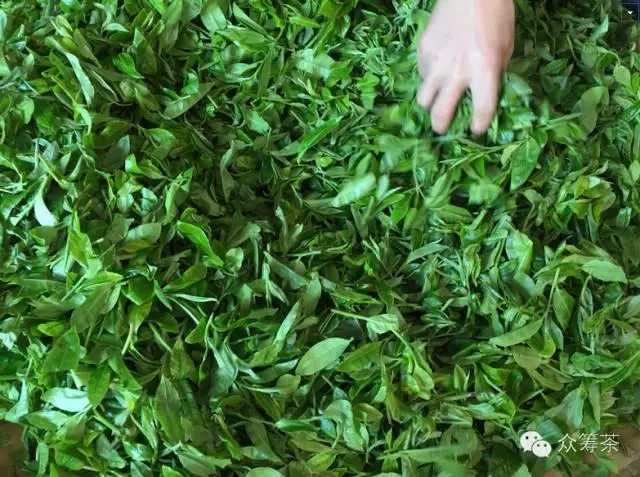
1. Handling of fresh leaves
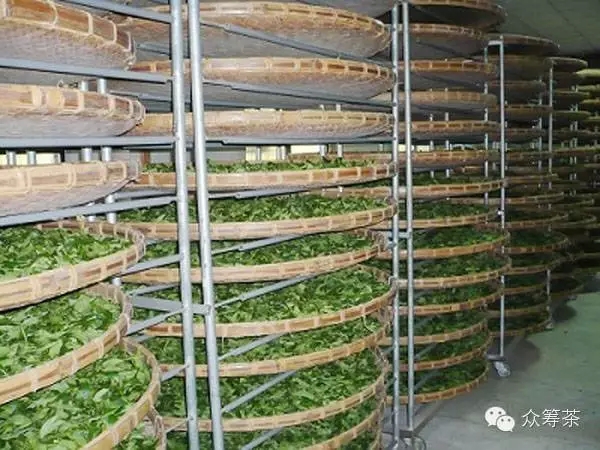
Fresh leaves are not too delicate; they do not easily absorb odors, so they can be transported down the mountain with ventilation. Withering is the key to fresh leaf handling. If this step is done well, there is a possibility of making good tea. The whole process of making tea, as I understand it, is a process of water removal, expelling impurities, and transformation. Regarding water removal, my personal understanding is that withering removes a quarter of the water, killing green removes another quarter, and finally sun-drying removes another quarter, leaving the last quarter as the dry tea. Of course, these numbers are not absolute; it depends on the tea and the making.
Withering must be done off the ground. If conditions allow, use a withering trough; if not, use bamboo sieves placed on racks or stools to elevate them. It must be off the ground. Fresh leaves should not be piled too thinly during withering, and they should be turned regularly.
2. Killing green
Killing green is stir-frying the tea. Generally, the stir-frying process is relatively long, around 20 minutes. It is appropriate to kill green 7-8 kilograms of fresh leaves per batch. I personally think that drum-type killing green is not necessarily worse than hand-frying (except for small batches of special tea made by top masters). I recommend drum-type killing green for about ten minutes, followed by a few minutes of wok frying. This ensures stable quality and allows for larger quantities. When stir-frying, it is important to clean the wok after each batch and have a dedicated person control the fire to regulate the wok temperature. Stir-frying is a skill; the key is the stir-fryer's feeling. When to turn quickly or bake slowly is very important.
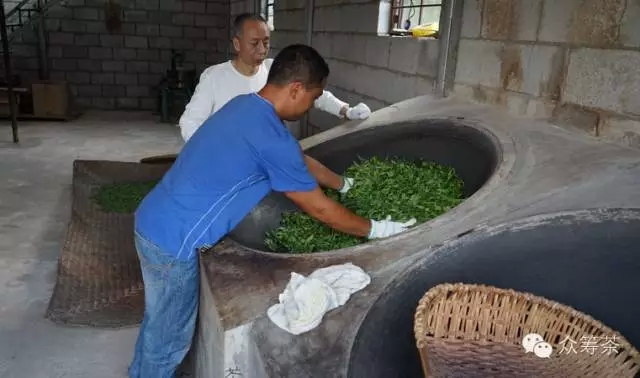
(The picture is of a rough processing facility in Nannuo Mountain; the tilt of the wok seems insufficient.)
3. Rolling
Rolling is very important. How much pressure and how many times directly affect the quality of the tea leaves. It still depends on the tea and the making. Generally speaking, after the tea is stir-fried and taken out of the wok, I suggest manually tossing the leaves to cool them down quickly before rolling.
4. Drying
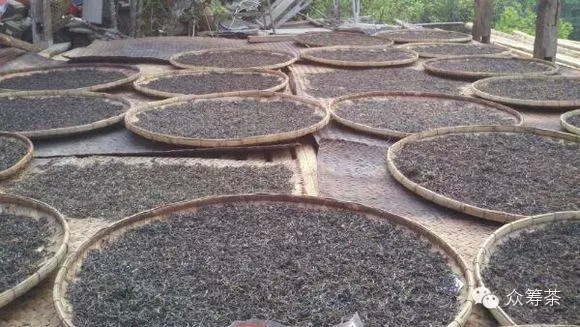
Drying is relatively simple, but also very important. After killing green, both rolling and drying require great attention to a clean environment and avoiding off-odors. Once the tea absorbs other smells, it is almost impossible to remove them. Drying should be done off the ground; it is best to use bamboo mats placed off the ground directly under the sun. Now plastic drying houses are very popular; they are not impossible, but if the height is insufficient and ventilation is poor, odor becomes a big problem. Even if the height is sufficient and ventilation is good, when there is no rain, it is best to dry directly outside the plastic house under direct sunlight.
With these four steps, and without the tea ever touching the ground, the tea is made. Whether it is good or not, you will know when you drink it.
The reason I compare making tea with cooking is to tell you that making tea is not too easy. Unlike cooking, just because you can cook does not mean you can make tea.Some images are sourced from Baidu. The article is original. Author: Lü Jianfeng, WeChat: 673998, works at 51 Pu'er Net, initiator of Houyue Crowdfunding Tea.
Paragraph comments 0 · moderated
Comments 0 · moderated