
It's been over a year since the last post, "Talking About Tea on Paper No. 21: What Makes Good Tea". I paused for so long because I felt I needed to settle down.
I started writing "Talking About Tea on Paper" in the spring of 2016. At that time, I had just begun to truly understand tea, was very excited, a bit arrogant, and eager to show off. So I wrote dozens of articles in the series. In 2017, I started building the Houyue factory. All fresh leaves were brought to my own factory for processing; I made raw tea, ripe tea, black tea, and white tea myself. I gained many new insights, and also read some books on tea processing and production principles. I should say, I became a bit afraid to write, fearing I might make mistakes. So afterwards, I chose to post small updates on my social circles. These small texts were my feelings or complaints during the period of building the factory and making tea, but they couldn't be formed into articles. I will continue writing the "Talking About Tea on Paper" series; my thoughts and experiences in learning and making tea will all be in this series, and when the time is right, I will compile them into a book.
The Biographies of Tea Masters is a small series that will cover all 26 letters of the English alphabet, totaling 26 articles. This is the first batch, including Biographies A-I, nine pieces in total. It is an anonymous tea master series under "Talking About Tea on Paper". Welcome to read and welcome your feedback.
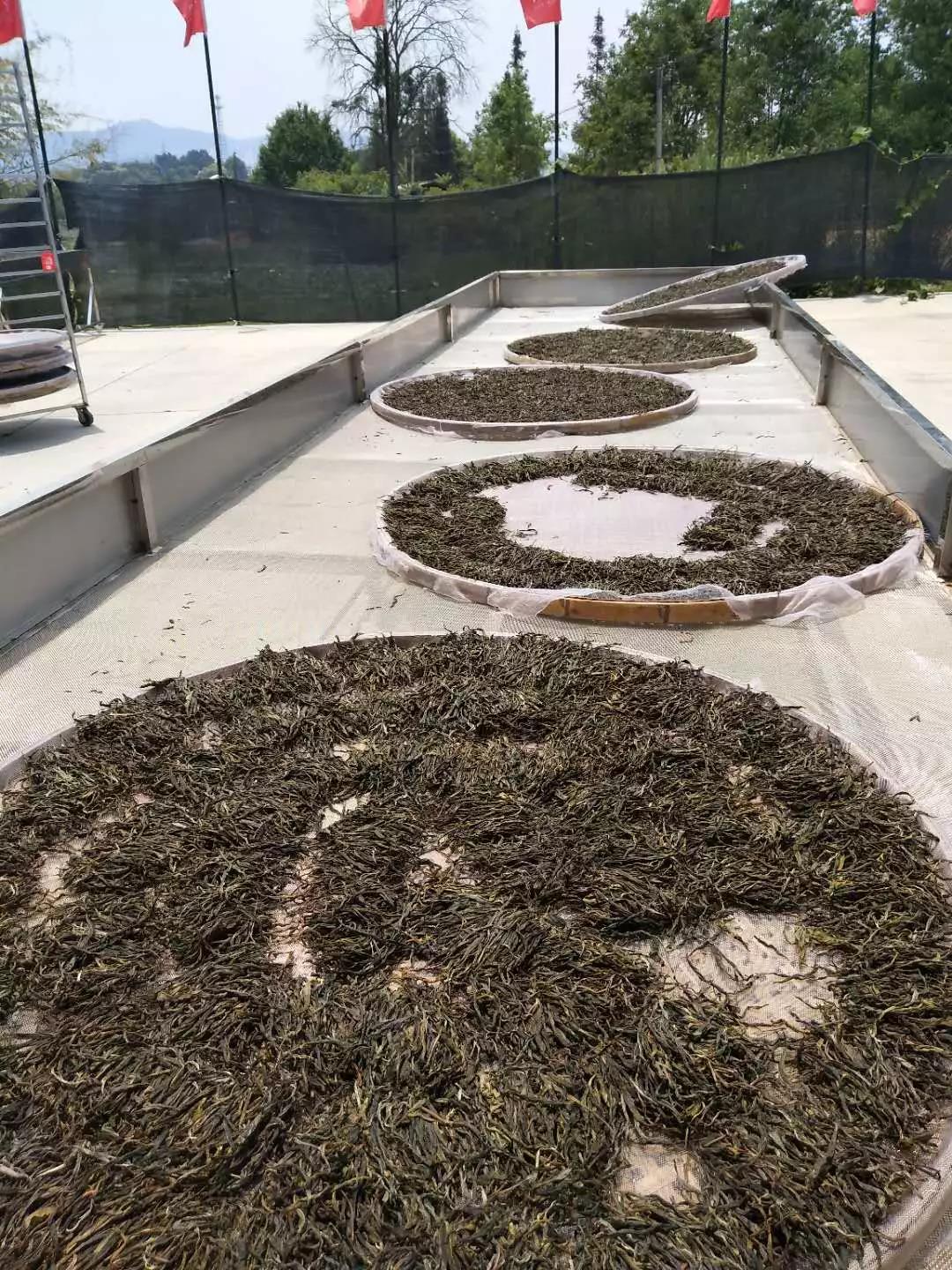
Houyue factory ancient tree raw tea drying in the sun
Biography of Tea Master A.
Tea Master A wanted to make high-end pure ancient tree tea from a specific tea mountain. After tasting samples and finding them good, but worried about ecological issues, he sent soil for testing. In the first year, he only made some samples. The soil and sample test results were excellent. A was overjoyed and immediately shared the good news with the tea farmers and a few close friends who were also in the tea business.
The next spring, A came to the tea mountain early, ready to make a big move, but found that all the target tea trees had been contracted out by the tea farmers for five years in one go. There was no way around it, so A spent more than three times the price to still make a batch of tea.
In the third year, A spent nearly double the price again...
By the sixth year, A was still at it, but the price had increased nearly tenfold...
Biography of Tea Master B.
Tea Master B went up the mountain to supervise the picking of fresh leaves. B asked all the pickers to wait and not pick without his command. B found a flat spot, sat down cross-legged, took out an ancient compass, and studied it carefully. After a long while, B finally spoke: "Now is the perfect time to start picking." Only then did everyone begin to pick the fresh leaves.
Biography of Tea Master C.
At the beginning of a tea gathering, the host had just poured the first infusion. C took the gaiwan, examined the leaves at the bottom for a long time, took a small sip of the tea, and slowly said: "This tea is very good, but the leaves were picked half an hour too early." The lively gathering fell into an instant silence.
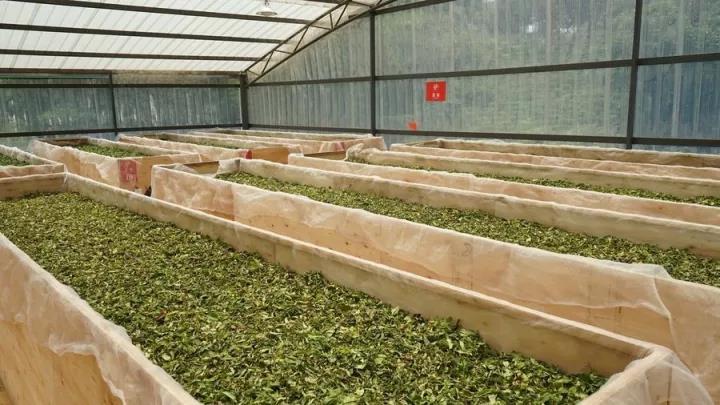
Fresh leaves withering
Biography of Tea Master D.
D is from Taiwan. For each batch of tea he makes, he first sets a total selling price, say 100,000. He sells half, then doubles the price, so the remaining tea's total selling price is still 100,000. He sells half again, doubles the price again, and the total remains 100,000. Even if only two cakes remain, he sells them at 50,000 each, and the last one at 100,000. If someone wants to buy everything at once, he absolutely refuses, only selling half.
Biography of Tea Master E.
The first time I met E was at a summer barbecue stall in Kunming. He was casually dressed with a loud voice. After chatting, I felt he had just learned to distinguish raw and ripe Pu'er tea, and was clueless about everything else. The next year, I heard from several people that there was a master E on the tea mountain who was teaching people how to stir-fry tea everywhere. In the third year, I actually met E in Menghai. He was dressed in tea master attire, twirling wooden beads in his hand. Seeing a crowd, he brought out a packet of tea and invited everyone to taste it. After a few rounds, E pressed everyone for their opinions. Everyone praised the tea, saying the material and processing were excellent. E laughed heartily and said: "This is a standard small-tree tea; it's my stir-frying skill that's high." I noticed several people barely swallowed, just wetting their lips and putting the cups down, but they all praised the tea. I could only hear E's laughter growing louder...
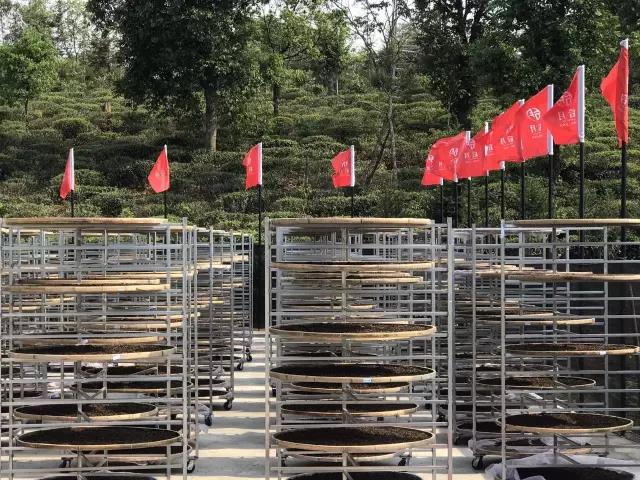
Sun-dried red tea drying
Biography of Tea Master F.
In the seventh year of selling tea, F still didn't understand tea well. He was okay with mid-to-low-end tea, but clueless about high-end. F liked to drink tea from large cups, strong and one cup after another, without feeling any discomfort. Only when the concentration was high enough did F have some judgment about the tea. At the end of the year, during a casual tea chat with peers, F was still drinking casually from a large cup when suddenly his heart raced and his body felt weak. It was different from the tea drunkenness he felt when he first started. Even after eating, he felt unwell for a long time. From then on, F never dared to drink tea casually, let alone strong, large cups of thin, harsh tea. It was also after that incident that F finally had an epiphany and understood and truly appreciated various high-end teas.
Perhaps many things are like this: you strive desperately to understand and obtain, but your body gives out.
Biography of Tea Master G.
G was originally a public official who loved tea. In 2004, G took unpaid leave and started selling Pu'er tea in a tea market. He made a small profit in 2005, and a big profit in 2006. So he raised funds from various sources, borrowing from relatives, friends, and banks, accumulating large debts. At the end of that year, he bought over 1,000 pieces of a certain iron cake at over 4,000 yuan per piece, along with various other brands, totaling over 3,000 pieces, planning to work hard for a few years and then retire. Before the Spring Festival, the iron cake was at 5,000 yuan per piece, but G didn't sell, planning to wait until it rose above 10,000. He didn't sell the other teas either. In March 2007, the Pu'er tea market crashed. G remained calm at first, refusing to sell at a loss. He struggled for a year, and by the end of 2008, the iron cake was cleared out at over 300 yuan per piece, and all other teas were also cleared, recovering less than 20% of the cost. With no other choice, he sold his house to pay off debts. G's mentality was still okay, but when drunk, he would occasionally mutter phrases like "Greed knows no bounds..." and "Back to square one..."
Biography of Tea Master H.
H used to work in marketing. He found the tea industry to be low-level, but with many beautiful women, so he switched to the tea industry. First, he read some books on tea, took meticulous notes, and marked key points. He also searched Baidu extensively and found several "errors"...
Then H wrote two books, which were lukewarm. H was unwilling to accept this, so he dug out his previous notes and started a public account. Based on others' works and viewpoints, he would seize on one or a few points and not let go, writing clever but false articles, attacking numerous authors. Finally, he became "popular"...
Biography of Tea Master I.
For the same pile of ripe tea, Menghai tea merchant Huang bought 10 tons and made a batch of low-end ripe tea. He sold 357-gram cakes at 13 yuan each in bulk, and sold out in less than half a year. Huang was very content and often boasted about it in conversations.
The remaining 15 tons were bought up by the well-known tea master I. While processing the tea, I began telling stories: old Banzhang spring ancient tree material, fermented by a senior master from the old Menghai tea factory, then hand-wrapped in fine cotton paper, with the outer box bearing the three characters "老班章" in vigorous calligraphy. Each piece contained 28 cakes, weighing 10 kilograms, with a limit of 10 pieces per person. The wholesale price was about 30% of the retail price. For a time, I and his team were flooding the market with this "Old Banzhang" tea, constantly posting about it. In less than half a year, it sold out, with the transaction price exceeding 1,000 yuan per kilogram. I didn't think much of it; it was a small matter.
Huang had been watching all along and was astonished.
View more articles in the Biographies of Tea Masters series: Table of Contents for Biographies of Tea Masters
Comentarios por párrafo 0 · moderado
Comentarios 0 · moderado