
This is the thirtieth article in my "Tea Talk on Paper" series. Click to read more "Tea Talk on Paper" articles.
I still remember the first time I drank Laobanzhang: the taste was clear and sweet, the soup was full-bodied, the aroma had an orchid base, and the aftertaste was long-lasting. I was amazed by this tea. In recent years, I have been intermittently guarding and harvesting Laobanzhang, but I increasingly cannot find that feeling. Of course, business is business, and I still made some pure ancient tree Laobanzhang, but I almost never drink Laobanzhang in my daily life, except when guests specifically request it. Making a product from a tea I rarely drink gives me a sense of guilt, which is the trigger for writing this article.
There are many articles about Laobanzhang, and I believe everyone is familiar with its background. I won't waste your time repeating it; let's get straight to the point.
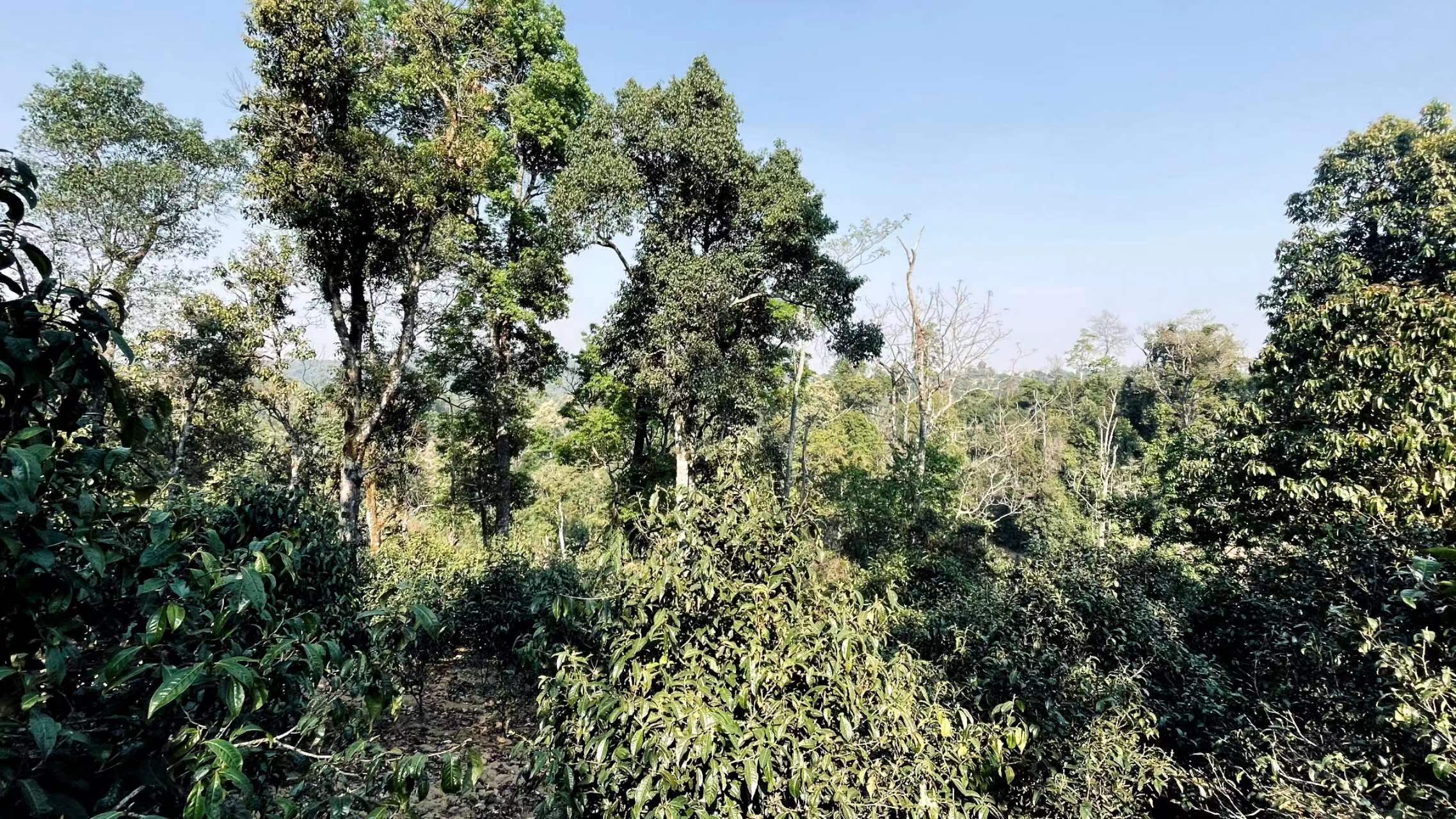
Laobanzhang Tea Garden
1. My Understanding of Good Tea
The following statements are based on experience. Since there is still relatively little known data about tea, if you are a data enthusiast and need detailed scientific data, you can close this article now.
But experience is also science, and for tea, experience is particularly important.
1.1 The Key is Ecology
Why is ancient tree tea good?
Is it because the trees are old? No. It's because the ecology is good.
The ancient tea trees that have "survived" are mostly in forests. The quality of ancient tree tea made in forests is indeed good. Coupled with government guidance, promotion by merchants and tea enthusiasts, or rather hype, everyone is chasing ancient tree tea. Since the production of ancient tree tea is limited, accounting for only about 2%, prices rise year after year, and famous mountains are increasing.
I have made tea from large tea trees in front of and behind houses in many places, and it really doesn't taste good. I have also made tea from small trees in the forest, and that clear sweetness and wild charm brought such pleasure that it was amazing. This is why small trees in forests like Yiwu are priced higher than ancient trees near homes.
This is my experience: good tea first requires good ecology, then soil, water, latitude, altitude, and other factors. I won't expand on that here.
1.2 Flavor Direction
I started selling tea in 2008, and that's also when I began learning about tea. Initially, I liked teas with heavy and strong flavors, but now I prefer teas that are mild, clear, sweet, with a lingering charm, and that make my body feel comfortable. Then I discovered that almost all of these teas come from forests, or at least were once in forests. This change in flavor preference has been validated by countless peers and seasoned tea enthusiasts. I believe this is a "correct" choice.
Of course, this "correct" is in quotes; it doesn't suit everyone. Sichuan cuisine is popular all over the country and was once my favorite, but now I can't eat much of it. Occasionally it's fine, but if I eat it regularly, my body can't handle it. However, I can regularly eat relatively lighter cuisines like Cantonese, Shandong, and Huaiyang. This is because my age makes my body need lighter food, but that doesn't stop most people from still liking Sichuan cuisine. Similarly, the taste of tea is the same.
My taste includes both oral sensation and physical sensation. In fact, I believe body sensation is the most critical. A tea with poor body sensation generally doesn't have a good taste, and a tea with comfortable body sensation usually has a good taste. Experience tells me that tea with good body sensation must come from good ecology. I'll write an article about body sensation when I have the chance.
1.3 Correct Processing and Storage
Processing is also important. I am in charge of tea for two tea companies, and all our tea is made by our own team; we rarely buy tea from outside. This is one reason we can maintain a consistent style across our four major tea categories: raw, ripe, white, and black. Another reason is the selection of raw materials, which prioritizes forest tea. Since 2016, our promotional slogan has been: "Big tree tea from the forest."
The importance of storage is undeniable. Tea that has gone bad is garbage, whether it's Laobanzhang or Bingdao.
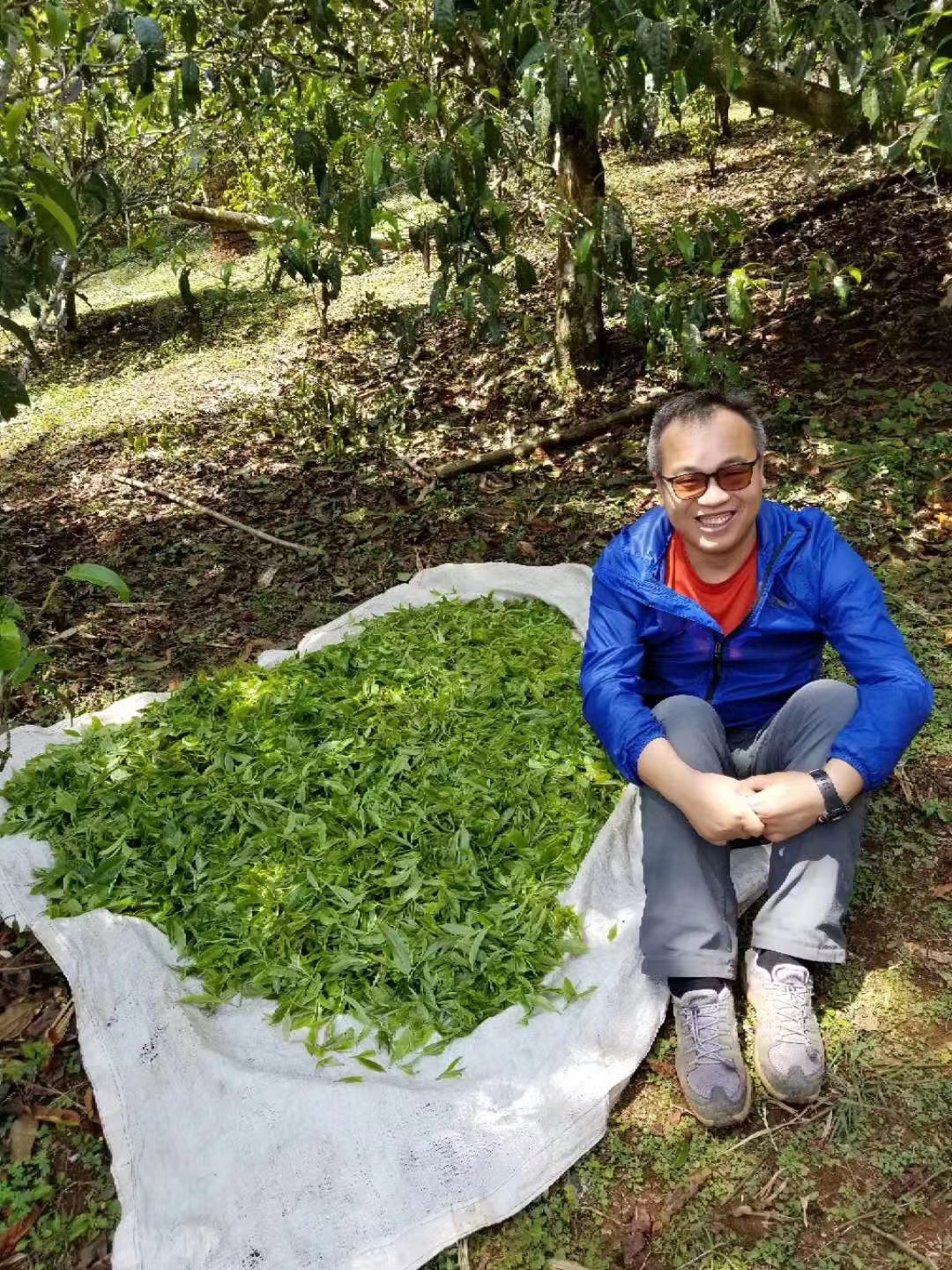
I am guarding and harvesting fresh leaves in Laobanzhang
2. Laobanzhang's Rise: Because of Ecology
2.1 First Impression of Laobanzhang
Once, I chatted with a local from Menghai about Laobanzhang. His uncle had a relative in Laobanzhang. In the past, when the relative came down to Menghai, he would bring a large snake bag of tea and two chickens. His uncle would take the chickens and casually leave the tea at the door, then bring it inside or give it away later. Now, when this relative comes, he only brings a small plastic bag of tea, which is immediately received with both hands and carefully placed inside. When he stopped bringing chickens, his uncle no longer paid attention.
Before 2004, because Laobanzhang was deep in the mountains and the tea gardens were all in the forest, with excellent ecology, heavy shade, and abundant moisture, the appearance of the tea was poor, dark and coarse. Its price was lower than other villages in Bulang Mountain. Additionally, due to poor transportation, almost no one knew about Laobanzhang tea. Many Laobanzhang teas could only be sold by pretending to be from other villages. I have talked with merchants who bought Laobanzhang tea in those years. At that time, the roads to Laobanzhang were terrible. The tea was transported by hand-pulled tractors, with the tea packed in woven bags and piled in the tractor's trailer. When encountering large potholes on the road, they had to unload the tea, separate the tractor, drive the tractor head over, carry the trailer over by hand, then carry the tea over and reload it. There were several such potholes along the way, requiring multiple unloadings and reloadings. It was really tough.
2.2 The Goodness of Laobanzhang Tea
The first time I went to Laobanzhang, the road was bad, but the ecology of the tea garden was good. The large tea trees were all in the forest, and the tea made from them had a clear and sweet taste, with the unique charm of Laobanzhang, the "Laobanzhang charm," fully present.
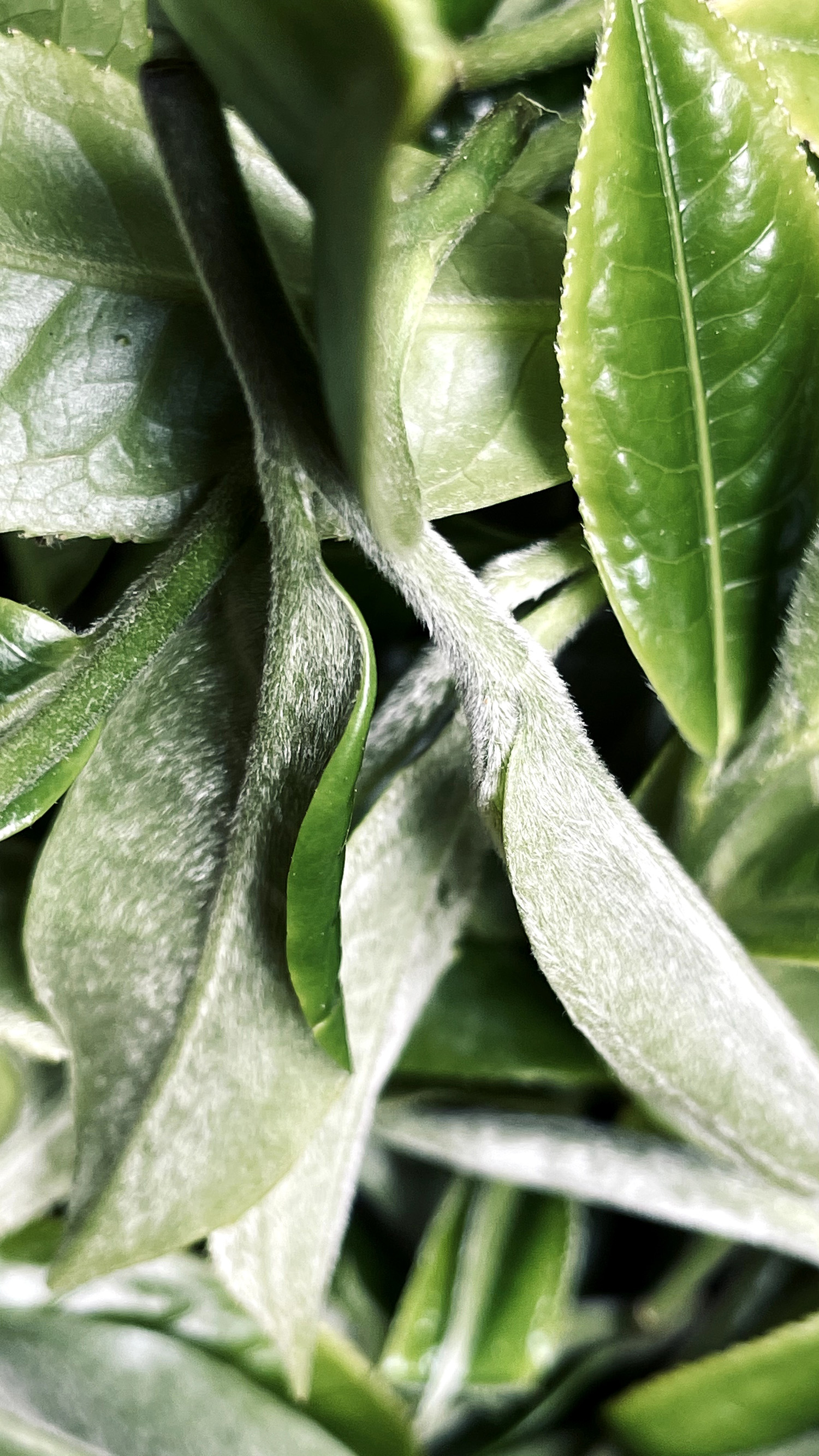
Laobanzhang Fresh Leaves
3. Laobanzhang's Fall: Because of Ecology
I hope we never see that day.
3.1 Forest Retreat, Tea Advance
My first time going to Bulang Mountain was in 2010. I remember after crossing Menghun Dam and going up the mountain, the road was lined with forests, interspersed with villages and tea gardens. No matter how hot the weather was, it was cool on the mountain, extremely comfortable. Now, when going to Bulang Mountain, after crossing the dam and going up the mountain, there are tea trees all along the way, interspersed with forests. Every village has grown much larger, and there are processing workshops everywhere. The mountain feels hotter than Menghai county town, and that comfortable feeling is gone.
In Laobanzhang, every household has built luxurious houses. The village has expanded more than tenfold in the past decade or so. The roads built in the tea gardens are better than the main roads of many villages. Most of the land used for this expansion came from cleared forests and a small portion from tea gardens. Coupled with the terrifying area of newly planted tea gardens, Laobanzhang is a typical example of "forest retreat, tea advance."
There are many famous mountains with such "forest retreat, tea advance," not just Laobanzhang, but also Bingdao, Xigui, Molie, Laomane, Mannuo, etc. Conversely, in many areas where tea prices are not high, such as Pu'er, Baoshan, and Dehong, it is "tea retreat, forest advance." Perhaps in the near future, these places will give birth to many new famous mountains. History often repeats itself in cycles.
"Forest retreat, tea advance" means increasing production while degrading ecology.
3.2 Production
Laobanzhang used to produce about ten tons of tea in a spring tea season; now it is estimated to be around a thousand tons.
Where does all this tea come from? It comes from clearing forests.
Actually, mentioning production is also repeating "forest retreat, tea advance," but I specifically list it separately for a stronger contrast.
3.3 Taste
Today's Laobanzhang, especially this year's (2022) Laobanzhang, I have tasted dozens of ancient tree samples, and I have hardly tasted any that are clear and sweet. Even the bitterness and astringency are not obvious. Thick, strong, and sweet (not clear sweet) is my impression of this year's Laobanzhang tea. How can such tea be called king?
Without guests, except for tasting, I haven't brewed Laobanzhang once in the past three years. This feeling is widely recognized by more and more peers and professional tea enthusiasts.
3.4 Price
The price of Laobanzhang tea absolutely cannot stay this high forever. Now, even the small trees in Laobanzhang village are 5,000 yuan per kilogram. With over a thousand tons of tea, that's tens of billions of yuan, far exceeding the market scale of the industry giant Dayi. Is this normal?
In fact, many small tree bases in Laobanzhang are secretly sold by some contractors in spring at a few hundred yuan per kilogram. I wonder how long the village's price of several thousand yuan can last, relying on retail sales to tourists.
Our Laobanzhang being sun-dried
4. Summary
4.1
Without ecology, there is no soul.
4.2
As a tea enthusiast, my advice is:
Like good tea, like the taste, like the tea that makes you feel comfortable when you drink it. Don't drink tea because of fame or price.
4.3
As a peer, my advice is:
Sell the tea you drink yourself.
Store tea with good ecology.
4.4
As a tea farmer, my advice is:
Always have reverence. When cutting down trees, think more.
4.5
This is about Laobanzhang, but other famous mountains have the same problem. Ecology is the red line. When tea drinkers vote with their feet, the world will never return, and regret will be too late.
The article and images are original. Author: Lü Jianfeng, WeChat: ynwuse, working at 51 Pu'er Net, initiator of the Houyue Crowdfunding Tea, co-founder of Dehong Ancient Tea.
Paragraph comments 0 · moderated
Comments 0 · moderated