
Lao Zou, male, 23, just graduated from university with a major in tea science. Because he looks old, his friends call him Lao Zou.
Lao Zou plans to open his own tea shop, but after studying tea for several years, he lacks practical experience. One morning in July, Lao Zou came to a friend's initial processing facility in Menghai, intending to thoroughly understand tea making. Lao Zou's friend's facility mainly produces sun-dried green tea. The owner, who is also the tea master, is in his forties and surnamed Li. Because he looks young, everyone calls him Xiao Li.
Xiao Li first took Lao Zou on a tour of the facility, chatting as they walked. Lao Zou gained a general understanding of Xiao Li's facility. The facility had a total of 7 people: Xiao Li plus 6 workers, 4 withering troughs, 4 wok-frying stations, and 2 roller fixation machines. The workshop was not large, about 200 square meters, but the drying yard was very spacious, with a transparent-roofed drying shed covering over a thousand square meters. Outside the shed, dozens of large bamboo mats were laid out horizontally and vertically, covered with tea. The entire facility processed about 1 ton of fresh leaves per day, with manual fixation accounting for about 30%.
At noon, Xiao Li accompanied Lao Zou for a drink, with a large plate of fatty and lean local pork, making the wine especially fragrant. After lunch, Lao Zou took a nap and woke up around 4 PM. People began to deliver fresh leaves one after another. Two people weighed the leaves, while the remaining four dumped them onto the withering troughs. Xiao Li was responsible for recording and paying. In spare moments, he arranged for the workers to transfer the leaves from the withering troughs onto bamboo mats in the drying shed, spreading them flat. Above the mats, at a height of over 2 meters, a large sunshade cloth was pulled to block sunlight from reaching the leaves. Lao Zou thought, this must be for making black tea. Before coming, Lao Zou had deliberately reviewed his books again. The steps for making sun-dried green tea are: fresh leaf spreading and cooling - fixation - rolling - sun-drying. There was no such step for processing fresh leaves. Lao Zou had always believed that the process of sun-dried green tea was entirely the same as green tea, and that sun-dried green tea was not Pu'er raw tea but sun-dried green tea.
When Xiao Li was free, Lao Zou approached him, pointed at the fresh leaves in the drying shed, and asked what kind of tea he was making. Xiao Li casually replied, "Raw tea." Lao Zou was puzzled but didn't want to ask further. Seeing more fresh leaves arriving, he quickly went to help.
That day, there was an excess of fresh leaves, over 1.3 tons, filling the withering troughs and the drying shed. After dinner, it was past 9 PM. Xiao Li arranged for the workers to turn the leaves once, then rest early, as the next day's fixation would be tiring. After assigning tasks, Xiao Li invited Lao Zou to the tea table for tea. After a few cups, Lao Zou finally couldn't help but ask Xiao Li, "These fresh leaves won't be fixed until tomorrow? Isn't it just a few hours of spreading and cooling before fixation?" Xiao Li grinned and scolded, "You bookworm, this is withering, not just spreading and cooling. Our raw tea must be fully withered before fixation." Lao Zou muttered "Oh, oh" and brushed it off. Then they chatted about the tea they were drinking, the tea market, market trends, and various tea processing techniques. Since Lao Zou wanted to open his own shop and was a tea major, he spoke eloquently, and Xiao Li's envious gaze followed Lao Zou's waving hands as he talked.
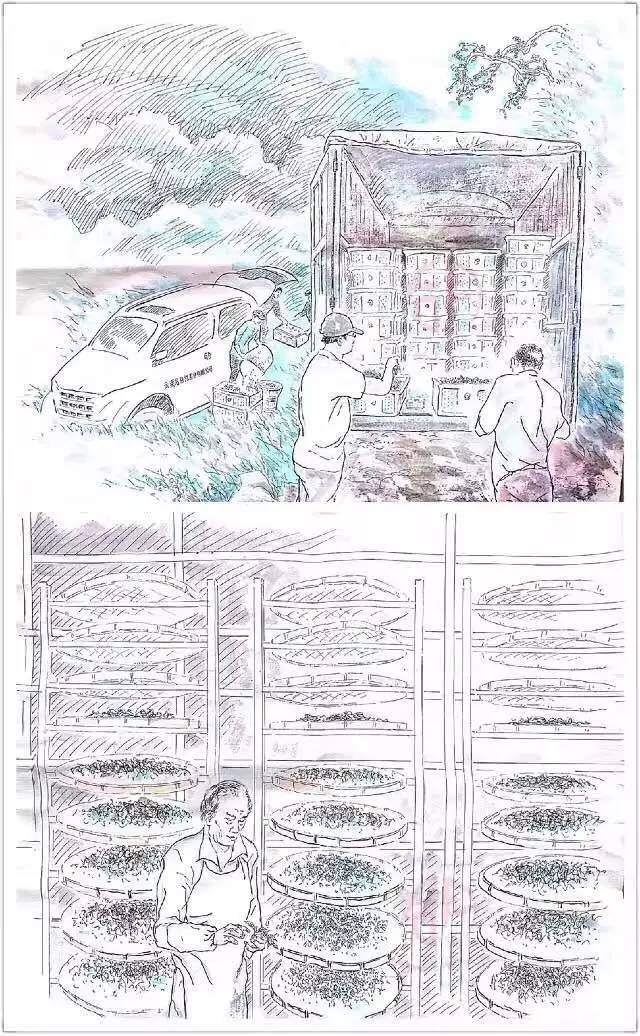
A quiet night passed.
The next morning, Xiao Li called Lao Zou to get up for breakfast. Lao Zou checked his phone; it was almost 9 AM. He quickly washed up and ate breakfast. The workers had already lit the stove and cleaned the woks, and the fixation machine was running. Xiao Li directed two people to first transport the fresh leaves from the drying shed. Everyone was busy. Lao Zou's hands itched; after watching a worker fry a batch of tea, he eagerly told Xiao Li he wanted to try fixation. Xiao Li smiled and arranged for a worker to stand beside Lao Zou to assist and guide him. Lao Zou caught on quickly, with precise movements and good wok temperature control, tossing and turning the leaves timely and accurately. Xiao Li praised Lao Zou, saying he was indeed a top student and did a good job with fixation.
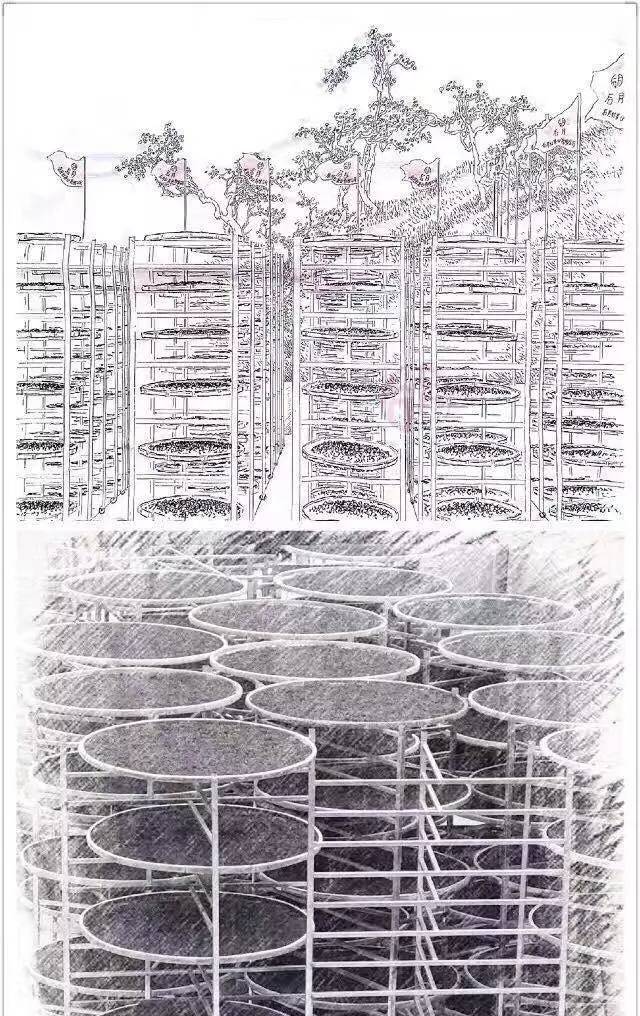
They fixed and rolled the tea, then spread it flat on bamboo mats in the drying shed under the sunshade cloth. The eight of them were busy and happy. By the time fixation was finished, it was past 2 PM, and they finally had lunch.
During lunch, Lao Zou kept thinking about the tea, wondering why it wasn't being spread out to dry. After eating, the workers went for a nap. Lao Zou couldn't help asking Xiao Li why the tea wasn't spread out. Xiao Li said, "Let it pile for a day; we'll dry it tomorrow." Then he pointed to the tea that was spread out and said, "This tea was from fresh leaves two days ago, fixed yesterday, and piled until today before drying." Lao Zou thought to himself, this is nonsense. Piling, even low piles, is only used for fermentation in dark tea and ripe tea. What kind of process is this? With many doubts, Lao Zou went to rest.
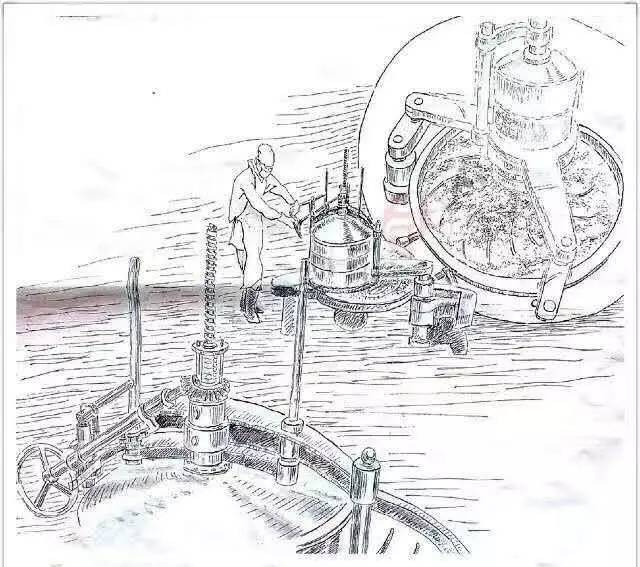
Around 4 PM, a friend of Xiao Li came to drink tea, and Xiao Li called Lao Zou to join. Xiao Li brewed the tea that had just been sun-dried, which was from fresh leaves two days ago, fixed yesterday, and dried today. Xiao Li's friend praised it, saying it had almost no bitterness or astringency, good mouthfeel, and pleasant aroma. He remarked that such raw tea didn't need to be stored; it could be drunk immediately.
Xiao Li interjected, "There are over thirty tea processing techniques. For fresh leaves, there are spreading and cooling, sun-drying, making green, shaking green, wave green, and withering, which is commonly used in Yunnan. With so many techniques, who says which one makes green tea or black tea? How to process tea to realize its value better and achieve your goals—you can choose the techniques accordingly. If you say this is black tea process and that is green tea process, isn't that putting the cart before the horse? Tea has at least 2,000 years of history. The six major tea categories were proposed by Professor Chen Chuan in 1984. If you say raw tea is sun-dried green tea, and someone else says it's sun-dried oolong, how can you argue clearly? The national standard for Pu'er tea clearly states: 'The processing technology of Pu'er tea is a unique post-fermentation process, including natural post-fermentation and artificial pile fermentation.' Raw tea is Pu'er tea. How can you say raw tea is not Pu'er tea but sun-dried green tea? Isn't that privately altering the national standard and disregarding the industry's future? Such harmful people should be condemned. Tea has no fixed form; people are flexible. Only by moving forward and making tea that makes people comfortable and healthy is the right way. As for conceptual disputes, they are just unnecessary worries."
Lao Zou just listened, didn't speak, and kept drinking the tea. He also felt it was very good, but something felt off. He couldn't pinpoint it. It wasn't like green tea or raw tea; he vaguely felt the tea liquor had a hint of black tea flavor.
After thinking for a long time, Lao Zou slapped his thigh and thought to himself, "Right, this is the taste of black tea. This tea is ruined; the process is not orthodox, giving it a black tea feel." Xiao Li and his friend glanced at Lao Zou, who had slapped his thigh, and then continued discussing the order.
While Lao Zou was muttering to himself that the process was wrong and the fresh leaves were wasted, Xiao Li's friend placed an order for 5 tons of sun-dried green tea and paid a deposit. Lao Zou was astonished. He had made ruined tea, and his friend wanted 5 tons...
A few months later, in his rented tea shop in Kunming, Lao Zou sent the article he had just finished, titled "Clarifying the Source: Pu'er Raw Tea is Sun-Dried Green Tea," via email to Association X and Magazine Y. He excitedly stood up from the rosewood chair and called Xiao Li to ask how he was doing. Xiao Li's voice was full of joy, telling Lao Zou that this year's tea was selling like hotcakes, with many tea merchants coming to order, and he was too busy to handle it all.
After hanging up, Lao Zou cursed, "These people really don't understand anything," and slowly sat back down on the large rosewood desk chair imported from Myanmar.
Article and images are original. Author: Lü Jianfeng, WeChat: ynwuse, working at 51 Pu'er Net, initiator of Houyue Crowdfunding Tea, convener of Yunnan Houyue Black Tea Co., Ltd.
Paragraph comments 0 · moderated
Comments 0 · moderated