
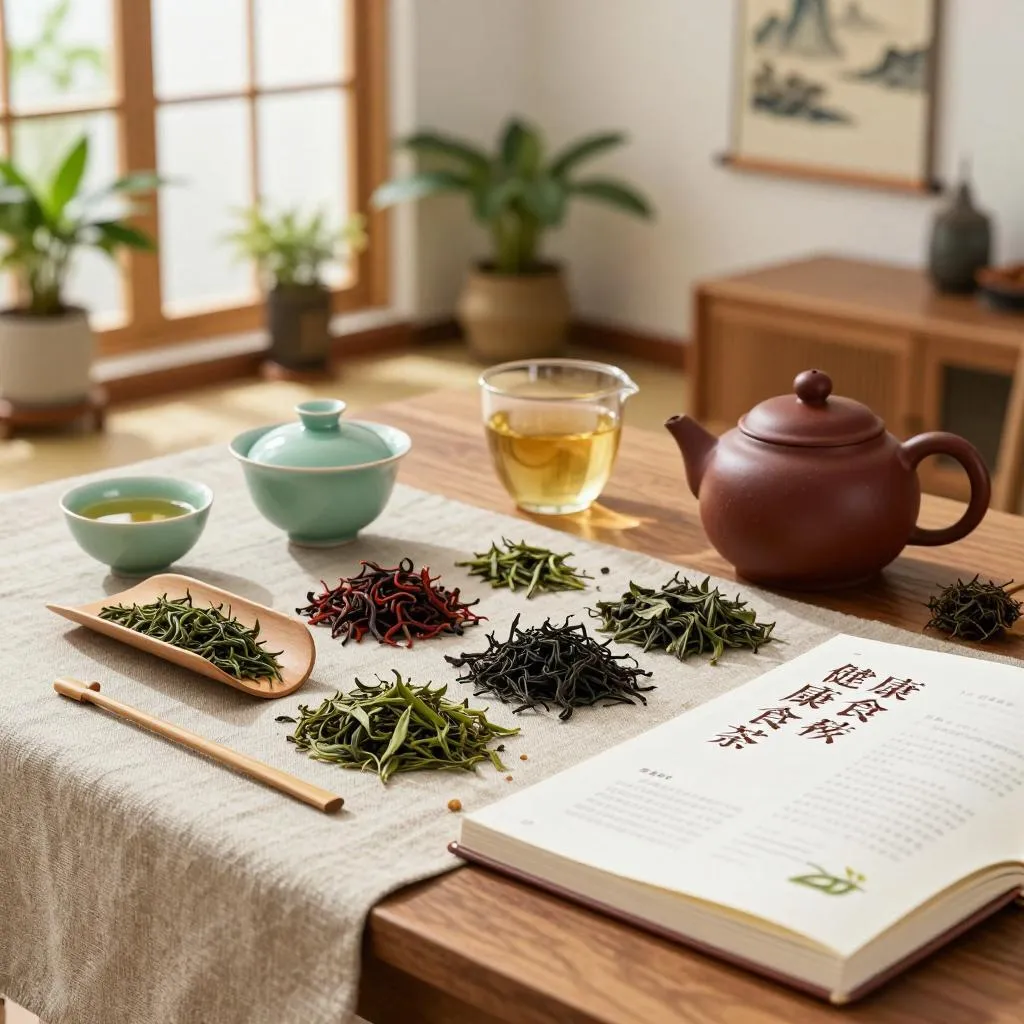
 First, memorize the tea-drinking mnemonic I spent months compiling:
First, memorize the tea-drinking mnemonic I spent months compiling:
**Prefer warm over hot; prefer fermented over raw;
Prefer aged over new; prefer fully ripened over under-ripe;
Prefer early over late; prefer tea snacks over drinking alone;
Prefer light over strong; prefer moderate over excessive.**
Spending months doesn't mean the content is difficult; it's just that I revised several versions to make these lines symmetrical and memorable.
If you have a better expression, please message me privately, and I'll revise again.
1. Let me explain the mnemonic.
1. Prefer warm over hot.
This is easy to understand, but also the easiest to overlook.
Our esophageal mucosa is actually very delicate, only 0.5-1 mm thick.
According to my research, experimental data shows temperature damage gradients:
50-60°C: Mucosa begins to show reversible damage
65°C: WHO's carcinogenic warning line
70°C: Contact for 1 second can cause irreversible damage
Above 75°C: Immediate necrosis and shedding of mucosal surface cells
The International Agency for Research on Cancer (IARC), under the World Health Organization (WHO), has reported that hot drinks above 65°C may increase the risk of esophageal cancer. Hot drinks above 65°C are listed as Group 2A carcinogens. The esophageal mucosa is fragile and delicate, with a normal tolerance temperature of 40-50°C.
When drinking tea, don't rush; wait 2 minutes. In fact, many things in life are like this.
2. Prefer fermented over raw.
Like bananas and persimmons, they taste better when ripe and don't harm the body.
Post-fermented foods: fermentation doesn't only refer to ripe tea, but also includes black tea, oolong tea, aged tea, etc.
Many tea industry peers and super enthusiasts of Pu'er tea love the strong, intense flavor of raw tea, enjoying the bitterness that turns sweet. Drinking such tea for a long time has caused health problems for many; drinking tea affecting health is not worth it.
"Raw" refers to cold and astringent qualities. Newly made green tea has a raw astringency, and under-processed raw Pu'er is severely cold.
By drinking more fermented and post-fermented teas, we reduce the intake of coldness into the body.
3. Prefer aged over new.
Tea generally improves with age, not just in flavor and aroma, but also in being smoother, less irritating, and more comfortable to drink.
Everyone chases fresh Longjing, but experienced masters will tell you that newly made Longjing should not be drunk immediately; it's better to wait a month.
Aged Pu'er has a large following; many tea enthusiasts and industry professionals who have had problems with new tea prefer aged tea.
Not only Pu'er, but also black tea and oolong tea with some age have a unique flavor and become more fragrant with time.
Some say ripe tea nourishes the stomach and doesn't cause dampness or coldness. This claim is problematic; no tea truly nourishes the stomach. It's just less irritating. Many low-end ripe teas are still irritating and cold; drinking aged ones is much better.
4. Prefer fully ripened over under-ripe.
Drink fully ripened tea, not half-cooked tea. In recent years, I've collaborated with some traditional Chinese medicine practitioners to address the coldness issue in tea. During testing, we found that 99% of Pu'er teas on the market are cold in nature. If the spleen and stomach's transformation and transportation capacity is insufficient, problems arise. Fully ripened tea is warm in nature, and even new tea can be drunk.
"Fully ripened" doesn't mean ripe tea is fully processed; it means all teas should be processed thoroughly, including raw tea, black tea, white tea, etc.
I've written many articles about the full ripening of Pu'er; for further reading, please refer to my other articles in the "Tea Talk on Paper" series.
Fujian people drink tea for a long time without problems because they mainly drink roasted oolong teas like Tieguanyin and Wulong, which require roasting. Roasting is a process that quickly heats and ripens the tea, reducing its coldness. In recent years, lightly roasted oolong has become popular, but caution is needed. If the tea master lacks experience and doesn't fully roast the tea, it can still cause dampness and coldness in the body.
5. Prefer early over late.
There is individual tolerance to tea. Some people find that drinking tea at night affects their sleep, causing insomnia. The closer to bedtime, the greater the impact. This is because tea contains alkaloids that have cardiotonic, diuretic, and nerve-stimulating effects. These substances excite the central nervous system, increasing brain cell activity, putting the body in an excited state, which affects sleep and can lead to insomnia.
Long-term tea drinkers may find that a cup of tea at night helps eliminate fatigue and improve sleep. For such people, drinking tea at night is acceptable, but it should be scheduled 3-4 hours before bedtime. Night tea should be light and choose fully fermented, less irritating teas like ripe tea, black tea, oolong, or aged tea.
For most of us, it's best to drink tea in the morning or afternoon, and avoid or limit tea at night.
6. Prefer tea snacks over drinking alone.
Pairing tea with snacks has been practiced since ancient times.
"Drinking alone" refers to drinking tea without snacks; many people can't handle that.
Having some snacks while drinking tea adds enjoyment and prevents tea drunkenness from drinking too much.
This is why tea snacks have developed rapidly.
Appropriate tea snacks complement the tea liquor without masking the tea's true flavor.
Common tea snacks include fruits, pastries, candies, raisins, etc.
7. Prefer light over strong.
As the classic text "Cai Gen Tan" says: Rich, fatty, spicy, and sweet are not true flavors; the true flavor is plain.
Light tea retains the beneficial components of tea leaves, allowing you to enjoy tea happily without consuming too many irritants.
Antioxidants like tea polyphenols and catechins are still present in light tea; caffeine content is lower, so it's less likely to cause palpitations; light tea is less irritating to the stomach, suitable for most people, especially the elderly with declining gastrointestinal function.
Tea is more like "functional water."
Many high-end ingredients are also light in flavor, like deep-sea seafood or sashimi, where you taste the ocean's essence and sweetness. If you made these ingredients into Sichuan style, aside from whether it's tasty, wouldn't it be a waste of precious ingredients?
Light but not bland—this is the flavor of good tea I often emphasize. The first "light" refers to a mild, non-irritating taste; the second "not bland" means the liquor is dense, round, rich in flavor, and full of charm.
Don't drink strong tea; light tea is good.
8. Prefer moderate over excessive.
Based on my observations, sensitive tea friends can drink one brew a day, avoiding evening consumption, with little impact on health.
Most people can drink two brews a day without significant effects.
There is no limit to the number of infusions per day; the tail water of good tea can be steeped continuously, with a sweet, mild, and balanced taste that is very pleasant.
If you particularly love tea and the tea is good, you can drink more infusions, but please note:
Tea cannot replace water; tea is only an effective supplement to water.
2. For those who need to taste teas.
Senior tea enthusiasts and tea industry professionals need to taste teas, but they also need to control themselves. Because their work involves tea, many need to taste and quality-control teas regularly, sometimes dozens of types a day. There are techniques for this. Take myself as an example: during initial screening, I keep the tea in my mouth, only tasting without swallowing, and spit it out. This way, the body is less harmed.
3. Additional remarks.
Drinking tea can be healthy, but it requires orderly drinking: don't drink strong tea, don't drink excessively.
We learn to eat from childhood, and we should also learn to drink tea. Don't blindly believe in tea masters; if you worship them, they're eyeing your wallet.
Trust yourself: if a tea makes you uncomfortable, don't drink it.
No matter how expensive, aged, or famous a tea is, if it smells pungent and tastes unpleasant, it should be discarded.
Tea that goes in cannot be taken out.
This is the thirty-ninth article in my "Tea Talk on Paper" series. Click to read more "Tea Talk on Paper" articles.
Comentarios por párrafo 0 · moderado
Comentarios 0 · moderado