
I often hear fellow tea makers talk about various pitfalls, and I have encountered many myself. Previously, I always thought I lacked experience and seniority. In the past two years, I haven't encountered these things, and I thought I was qualified to be in the tea industry.
But this time, after staying in Menghai for over three months, I encountered quite a few pitfalls again. Some cannot be mentioned, but I will share one recent incident with a pseudonym for reference.
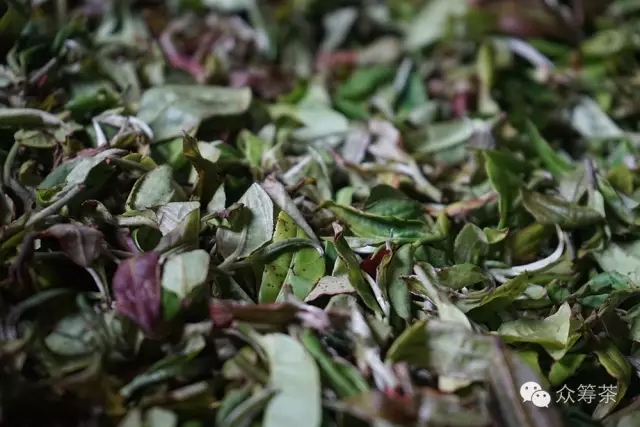
Houyue Crowdfunding Sun-Dried Red Tea Processing: Fresh Leaf Wilting
This time, we had a tea that was processed according to our process requirements from fresh leaves, at three different locations, one of which was the processing point at Menghai S Tea Factory. This point was rented by Boss A from S Factory. Boss A rented a large workshop from Factory C, with a drying shed of over a thousand square meters. When I visited, I really liked this point (initial processing facility).
On July 3rd, I briefly settled accounts with Boss A, and the processing fees were almost fully paid. We agreed that early on July 4th, I would take all the tea to the refining factory to press into cakes. On the evening of July 3rd, Boss A called me and said that S Factory wouldn't allow the tea to be taken out, claiming that A hadn't paid the rent for the initial processing facility. He said he really had no way, as his cash was tied up in tea in the warehouse, but he had talked with Boss B of S Factory and agreed to pay 50,000 first. He asked me to lend him 50,000. When I heard this, a thousand alpacas ran through my mind, but there was no way around it; I had to discuss with my partners, since we were waiting to make the tea.
On July 4th, I went to S Factory with A, hoping to pay the 50,000 and quickly take the tea away. After arriving, A first went into the office with a female supervisor of S Factory to discuss, and later called in General Manager Z of S Factory. After about ten minutes, A came to me and said that S Factory still wouldn't allow the tea to be taken out, and that the full amount had to be paid. I had no choice but to send the truck back first and then discuss with General Manager Z.
I said that these teas were processed on my commission, and I had no idea about the matters between you and A. If it weren't for that, I would have taken the spring tea away long ago. I left it here because I thought the environment of this initial processing facility was good, and the tea needed to let off some moisture. Now my production plan is set, and this incident has nothing to do with me, but I still agree to lend 50,000 to A, so please let me take the tea away. I explained that their disputes had nothing to do with me, and I was caught in the crossfire. General Manager Z only said that A could take the tea after paying, and that I had no relationship with him, so there was no need to say more.
In the morning, I had to go back. In the afternoon, I went with my partner to find A first, asking him to find a way. A's attitude was still good, but he simply didn't have the money to pay S Factory. We had to discuss with S Factory again, asking if we could pay 50,000 and take away half of the tea first to meet our urgent delivery. General Manager Z was very polite in the morning, but in the afternoon his attitude became very tough, and he was unwilling to say much. He said he had already made many concessions to A, and A had repeatedly failed to keep promises, so he couldn't do anything. He believed these teas belonged to A and had nothing to do with us, so he wouldn't let us take them. I was so frustrated; a thousand alpacas ran back and forth dozens of times.
Afterwards, I had no choice but to handle it quickly. The production was already planned, so I had to lend the full amount for A to pay S Factory's rent before I could take the tea.
Whether A or Z is right or wrong doesn't matter to me. I don't think I made any obvious mistakes; the only mistake was choosing to process at A's rented facility at the wrong time. A was definitely wrong for not paying as agreed. S Factory, knowing full well that all the tea was mine, still detained it and refused to let me take it. Even when I compromised and was willing to lend 50,000 to A to take away half the tea, they refused and took a tough stance. I think that doesn't seem quite right.
Now let's talk about pitfalls encountered before.
First, buying tea (raw materials). Previously, we mostly bought finished products from fellow tea makers. Starting from fresh leaves only began this year. When buying finished products, we usually first take samples. The fellow tea maker sends them over, or we go to their place to find them. We decide whether to use them based on the samples. The first and second Houyue crowdfunding teas were selected from over a hundred samples. We selected and blended based on taste requirements, first eliminating unqualified samples (those with pesticide residues, wrong tree age or region), then eliminating those that couldn't be used (not suitable for blending into our tea). Finally, we compared multiple blending plans to determine the proportion of materials, and then decided whether to buy and how much. For both teas, six people participated. The first took 23 days, the second 12 days. Before taking samples, we clearly told the tea farmers how long we needed them to keep the tea, otherwise if they sold it midway, wouldn't that delay things? The first two Houyue crowdfunding teas had many experienced people involved, so no problems arose.
But I have encountered many bizarre things before.
Once, I was satisfied with a sample and wanted to buy. When I went to pick up the tea, the sample had white tips and golden hairs, but the bulk tea was black and dull. I was stunned. Fortunately, I insisted on inspecting bag by bag. The seller kept saying it was the same thing, and that agricultural products might have some variation but basically the same. I wanted to curse; how could this be the same? In the end, I had no choice but to return with an empty truck. If I had let him deliver to my warehouse, there would have been disputes.
Another time, I wanted to buy ancient tree tea from Dahu Sai, but only a few dozen kilograms. Since the quantity was small, it wasn't worth going down the mountain. A tea merchant brought a sample that matched my previous tea perfectly, and the price was reasonable, so I agreed. We settled face to face, I paid, and he arranged delivery to my shop. A few days later, I received the goods. First, the appearance was slightly different, but not too much. When I brewed it and compared with the sample, the taste was completely different. There was no choice but to call the merchant over and brew both side by side. He insisted they were the same. I had no way, so I said I wouldn't buy this batch now and asked for a return, with shipping on me. The guy said, "Return? Sure, but I don't have the money to refund you now." He had already spent the money and would pay me back when he had it.
I was so angry, but what could I do? I had to handle it myself. Later, a friend wanted it, and I sold the tea, which cost less than 10,000, at a discounted price of over 3,000, losing more than half.
So how can we avoid this? Let me share my current experience. It may not be right, but I hope it can spark discussion and that everyone will not hesitate to offer advice.
First, find the right person.
The tea circle is small. First, ask around about whether the seller is reliable. Ask several people. If necessary, post on Weibo, WeChat Moments, and you can always find out. Nowadays, people don't speak ill of others. If someone is reliable, those who know will directly say you can trust the transaction. If unreliable, they will generally say to be careful and pay only after seeing the tea. Only those who are very familiar with you will say that person is unreliable.
Then, get the process right.
First, the sample must be correct. When going to the seller's warehouse, take samples from multiple bags (boxes) of the bulk tea, from both top and bottom of the bags. Before sampling, confirm whether the tea has been evenly blended. If it's blended, you only need to open a bag to see if it's the same tea; no need to sample from multiple bags. If not blended, you need to sample from multiple bags and positions. Grab a handful from each spot, put them on a large bamboo tray, and first check if the samples are consistent. If the tea quantity is not large, you can mix them together. The taste of the blended bulk tea will be similar to the sample. If the samples differ greatly from one another, it's best to give up on this tea; it's not worth wasting more time.
Second, the transaction process must be correct. It's best to have a contract, agreeing on the price, quantity, and based on the sample confirmed by both parties, and agreeing to pay after the tea arrives at your warehouse and is inspected. Then it's simple: when the tea arrives, open several bags (boxes) for inspection. I usually inspect all if the quantity is small, like only a dozen bags. For larger quantities, I open at least one-third, mix the inspected tea, brew it with the sample, and if it matches and the weight is correct, I can pay.
Someone might ask, how to ensure the sample is correct? That's a good question. If you want to buy ancient tree tea from Yiwu Wan Gong, and someone gives you a sample of ancient tree tea from another part of Yiwu, which is also good, and the bulk tea matches the sample, but later you find the tea is not what you wanted, that's because the sample wasn't right. When I look for samples, I usually go to the tea farmer's home, drink some tea, and ask for a sample. For particularly expensive or special teas, I need to collect fresh leaves and make the sample myself. If I don't have that condition, I buy from others, from several sources. Don't begrudge the sample fee; it's a small amount at that time. The big money is when you buy the tea. After you understand the taste, compare with the sample to know if it's correct.
The tea road is long, and there are many pitfalls. I hope that tea enterprises and practitioners in the industry will self-discipline, and that there will be fewer pitfalls, reducing internal friction. Perhaps that is where hope lies.
Articles and images are original. Author: Lü Jianfeng, WeChat: ynwuse, working at 51 Pu'er Net, initiator of Houyue Crowdfunding Tea.
Comentarios por párrafo 0 · moderado
Comentarios 0 · moderado