
Mr. Wang is from Kunming, works in engineering, and is well-off. He and his friend agreed to arrive in Shuangjiang early on March 20, 2015. His friend, who has been making tea for years, helped him select a tree in Bingdao to make ancient tree single-tree tea, agreeing with the tree owner on a price of 18,000 yuan per kilogram of dry tea. Mr. Wang brought a sleeping bag, parked his Land Rover next to the tea tree, watched the owner pick, watched the owner process, and slept beside the tea at night. Mr. Wang kept refreshing his social media, and many praised his dedication, marveled at the high tea price, and envied Mr. Wang for securing the best tea tree in Bingdao. Mr. Wang suddenly became the "Prince of Bingdao" in his circle. While the tea was still being made, Mr. Wang made a round of calls: giving 200 grams to this leader, 150 grams to that partner, 100 grams to a good buddy... In the end, Mr. Wang had only about 100 grams left for himself. The next afternoon, when the tea was dry, Mr. Wang paid over 30,000 yuan in cash and headed straight back to Kunming with more than a kilogram of Bingdao tea.
Mr. Li is a lay Buddhist who has been chanting sutras and believing in Buddhism for many years. He has no other hobbies but a good cup of tea, especially ancient tree Pu'er from deep mountains and forests. Mr. Li is hands-on and can make tea himself, especially skilled at stir-frying. On March 20, 2016, Mr. Li brought three tea-loving friends on a direct flight to Xishuangbanna. A tea farmer he had cooperated with for years picked them up at the airport and drove straight to a village in Yiwu. It was late, so they chatted and went to bed early. The next morning at around 6 a.m., the tea farmer had breakfast ready. After eating, they mounted three motorcycles. Mr. Li could ride, and the tea farmer rode one, and they hired another person to ride the third. Six people on three motorcycles, with a sputtering sound, headed deep into the mountains. After about an hour on the motorcycle, the road ended. They parked the bikes and walked into the forest for nearly two more hours, finally reaching their destination: the big tea trees. For lunch, they had only dry rations. After several hours of work, they harvested over thirty kilograms of fresh leaves. By the time they returned to the village, dinner time had passed. They endured hunger to spread out the fresh leaves to wither before eating. After dinner, they slept first, then got up at midnight to stir-fry the tea, then slept again. In this way, after a week, Mr. Li and his team finally made the less than 100 kilograms of good tea they needed.
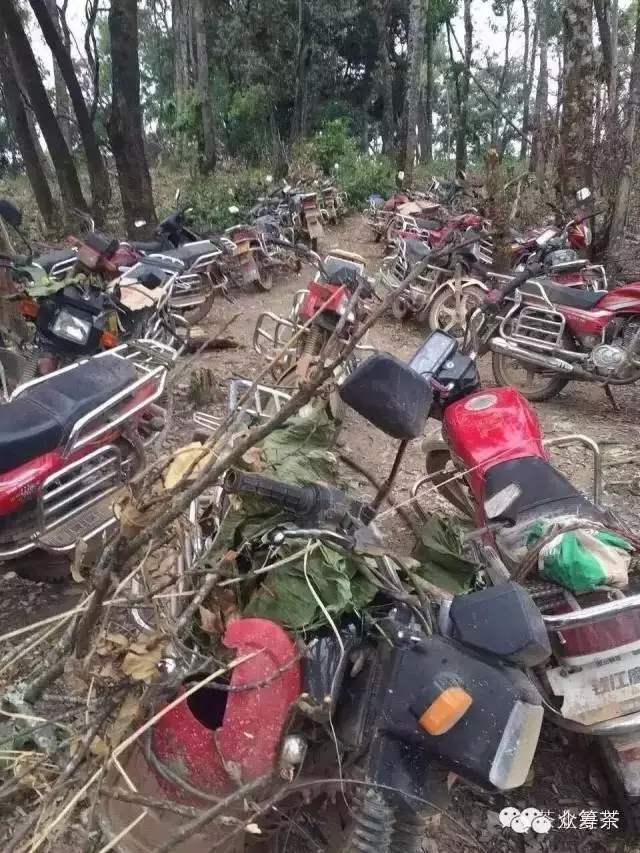
(Image from Tea Industry Revival, "Mint Sugar has fallen" | provided by Wang Ming)
Ms. Wang has a cold constitution and likes sun-facing ancient tree tea. On March 23, 2016, she arrived at a village in Menghai and stayed at the home of a tea farmer she had arranged with. The next morning, she followed the tea farmer to the tea garden. Ms. Wang designated a dozen trees, and the tea farmer organized several women to pick the sun-facing fresh leaves from those designated trees for her, at an extra 50 yuan per kilogram of fresh leaves...
If you, like me, stay in Menghai or Yiwu, visiting villages and shops, you will hear such stories and see such things every day. For the same tea trees, being able to sell for more money, even double, is a win for the tea farmers. For the buyers, having traveled a long way and spent time and money to come to the tea mountain, spending a bit more on fresh leaves doesn't matter, since they don't buy much anyway.
Let's discuss Laobanzhang village. I roughly estimate that during the spring tea season, no fewer than 15,000 people go up to Laobanzhang. About 15% buy tea, averaging 1 kilogram per person, so tourists buy 2.3 tons of Laobanzhang tea during the spring season. Many of these tourists select their own trees to make tea, and the Laobanzhang tea farmers are very adept at selling single-tree tea. Roughly estimating, the tourist effect alone brings in 20 million yuan for Laobanzhang spring tea. Many of the tea farmers' teas are sold directly this way. If they can sell at high prices, why sell to tea merchants? With tourists supporting this, and factories and tea merchants needing Laobanzhang tea, why would farmers rush to lower prices? So I think Laobanzhang prices may adjust, but they shouldn't drop significantly, for this reason.
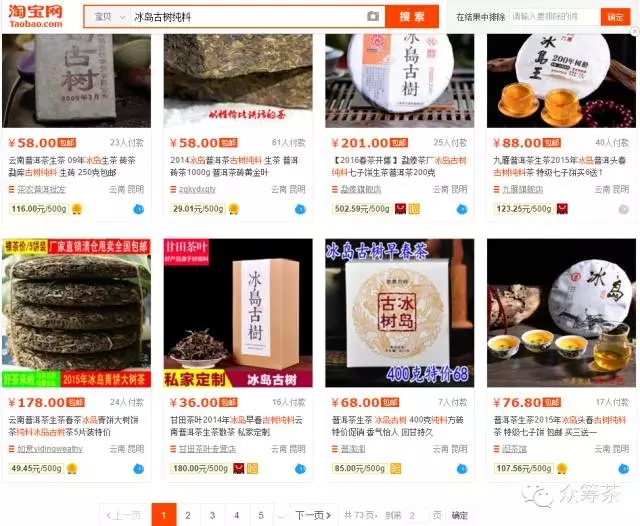
Pu'er enthusiasts love pure material and single-tree teas. Merchants see the brand effect of famous mountain teas and have launched pure material tea products. Taking Bingdao as an example, there are over 3,500 "Bingdao Ancient Tree Pure Material" tea products on Taobao alone. I have visited Bingdao village many times. I estimate that the total annual production of ancient tree tea in the entire Bingdao village is only about one ton, but with so many Bingdao pure material teas on the market, the quality can be imagined.
Finally, let's discuss two questions.
Is single-tree tea necessarily better than non-single-tree tea?
To discuss this, let me first talk about something I often encounter. People often tell me, "I have 100 kilograms of single-tree tea from such-and-such mountain." Here's a common sense: I often see that the fresh leaves from a single ancient tree in Yunnan during the spring harvest generally do not exceed 3 kilograms. Even if harvested all year round, it would not exceed 10 kilograms of fresh leaves, which would be just over 2 kilograms of dry tea. I don't know what kind of tea tree can produce 100 kilograms of dry tea from a single tree.
I have discussed this with many colleagues, and I often compare myself. Most single-tree teas, when tasted side by side, are indeed better than the mixed harvest from the whole area. The color, aroma, and taste are improved, sometimes significantly. I analyze the reasons: the selected single trees are usually taller, larger, and more vigorous, so the tea quality might be slightly better. But I think the processing of single-tree tea—picking, withering, stir-frying, sun-drying—is done with more care because of the higher price. Additionally, single-tree buyers often supervise the entire process, so the craftsmanship is much better. This is the fundamental reason for the improved quality of single-tree tea. Tea enthusiasts can randomly select dozens of large trees to make single-tree tea, then mix the leaves and compare with the designated single-tree tea to see if there is a significant difference in quality.
What is the exact scope of "pure material"?
I believe there is no true pure material. Even a single tree has differences between sun-facing and shaded sides, and between plump and thin leaves. If you separate these and make tea separately, the flavors will differ. It can be said that all Pu'er we see is blended tea.
But it is fine to define pure material by scope. For example, Laobanzhang ancient tree pure material means that ancient tea trees from the entire Laobanzhang village can be used. Tea made this way can be considered Laobanzhang ancient tree pure material. If small-tree tea or fresh leaves from other villages are used, it is not Laobanzhang ancient tree pure material. Another example: Bulang Mountain ancient tree pure material refers to ancient tree tea from the entire Bulang Mountain tea area, including Laobanzhang, Banpen, Guangbie, and Hekai. Such tea can be considered pure material for Bulang Mountain, or it can be called Bulang Mountain ancient tree blended tea.
Tea is for drinking. The good tea I understand is one that makes you feel comfortable when you drink it and is within your price range. This is also the intention behind our two crowdfunded teas. Whether single-tree, pure material, or blended, good quality is what truly matters. Let us forget the mountain names and use our bodies to perceive a good cup of tea.
Original article by Lü Jianfeng, WeChat: ynwuse, working at 51 Pu'er Net, initiator of Houyue Crowdfunding Tea.
Comentarios por párrafo 0 · moderado
Comentarios 0 · moderado