
This is the twenty-fourth article of "Tea Talk on Paper": The Future of Light-Fermentation Ripe Tea.
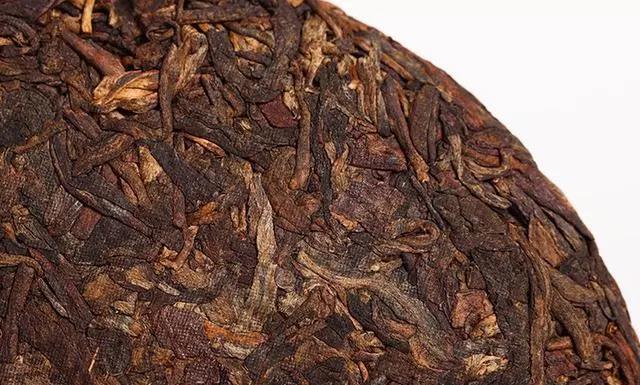 Houyue Laobanzhang ripe tea cake surface
What is the purpose of ripe tea?
First, let's look at the introduction of ripe tea on Baidu Baike:
"The formal appearance of ripe tea should start from 1973. In 1975, the artificial pile-fermentation technology was successfully trial-produced in Kunming Tea Factory, which opened a new chapter in Pu'er tea production. The reason for developing artificial fermentation technology was to solve the problem of the long time required for natural post-fermentation of Pu'er tea (often ten to dozens of years), so artificial imitation of the natural fermentation process was used to achieve rapid aging of Pu'er tea."
I agree with this statement. I have also exchanged views with many peers, and most agree with this statement.
Regarding the taste of ripe tea, most people believe that achieving rapid aging, that is, the feeling of old raw tea, is the best. I have also verified this with many peers, and they basically agree.
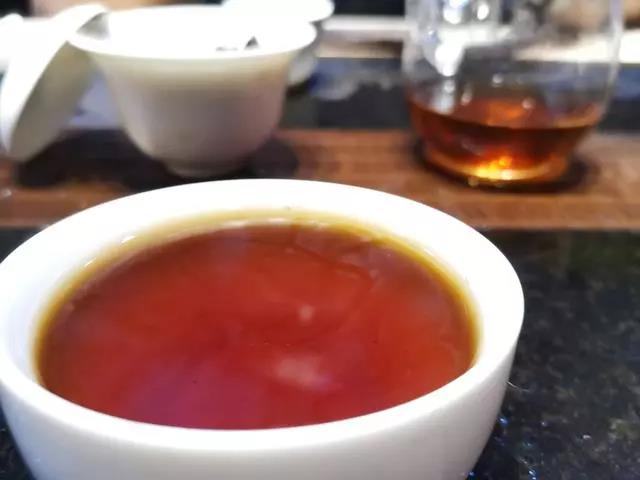
Houyue Laobanzhang ripe tea liquor color
So the question is, what is the taste of old raw tea?
To be honest, I have drunk many old raw teas, and few are particularly delicious. When I finally encounter one, it is at an astronomical price. Good old raw tea is indeed rare and expensive. If ripe tea can simulate the feeling of old raw tea, it is certainly a good thing.
I won't expand on this discussion; let me directly state my view. The feeling of good old raw tea, as I understand it, is an introverted taste: peaceful, non-irritating, sweet but not cloying, aroma in the water, soft yet powerful soup.
How can ripe tea achieve the feeling of old raw tea?
Currently, there are roughly three ways to make ripe tea achieve the taste of old raw tea.
- Moderate fermentation and aging, then long-term storage. This is currently the most common. Fermentation degree of 7.5 or 8+ percent, for a long period, about 5-10 years, it will have a ripe aroma. Even with sufficient time, it may not necessarily develop the feeling of old raw tea; it is entirely a matter of luck. If you don't believe me, go find various old ripe cakes on the market and drink them; few have the feeling of old raw tea.
- Blending raw and ripe tea. Blending ripe tea with some age and new raw tea or semi-new raw tea can immediately produce the feeling of old raw tea, but the soup is not very coordinated. For example, a certain brand's "imprint" ripe tea blends raw and ripe, calling it good layering, but in fact, it is forcibly combining raw and ripe tea. It tastes okay at first, but leaves a rough and astringent aftertaste, completely lacking the feeling of high-end old tea.
- Light fermentation and aging. Fermentation degree below 6, and when the pile is opened, it already has the feeling of old raw tea. After storage for more than 1 year, the ripe aroma and taste will significantly reduce. After storage for 3-5 years, it may have a relatively good feeling of old raw tea.
Most ripe teas on the market are of the first type, and indeed many old ripe teas are very good, but this requires long storage; ten years is only the starting point. But life is short, I don't want to wait that long, and it depends on nature; it may not achieve the feeling of old raw tea. For the second type, I have not tasted particularly good flavors, or I lack sufficient information and research on this aspect, but I personally resist this practice; it always feels impure. I think the third method is more suitable: well-controlled light fermentation, short storage time, not too long, maybe around three years, or one year, or even shorter.
Therefore, Houyue Laobanzhang ripe tea chooses light fermentation to simulate the taste of old raw tea. The fermentation time is 17 days, very short. If you have this tea, wait until the leaves are fully soaked and look; 30-40% of the infused leaves have green parts. We have also exchanged views with many peers about this tea, and most believe the maturity is about 5-6 percent.
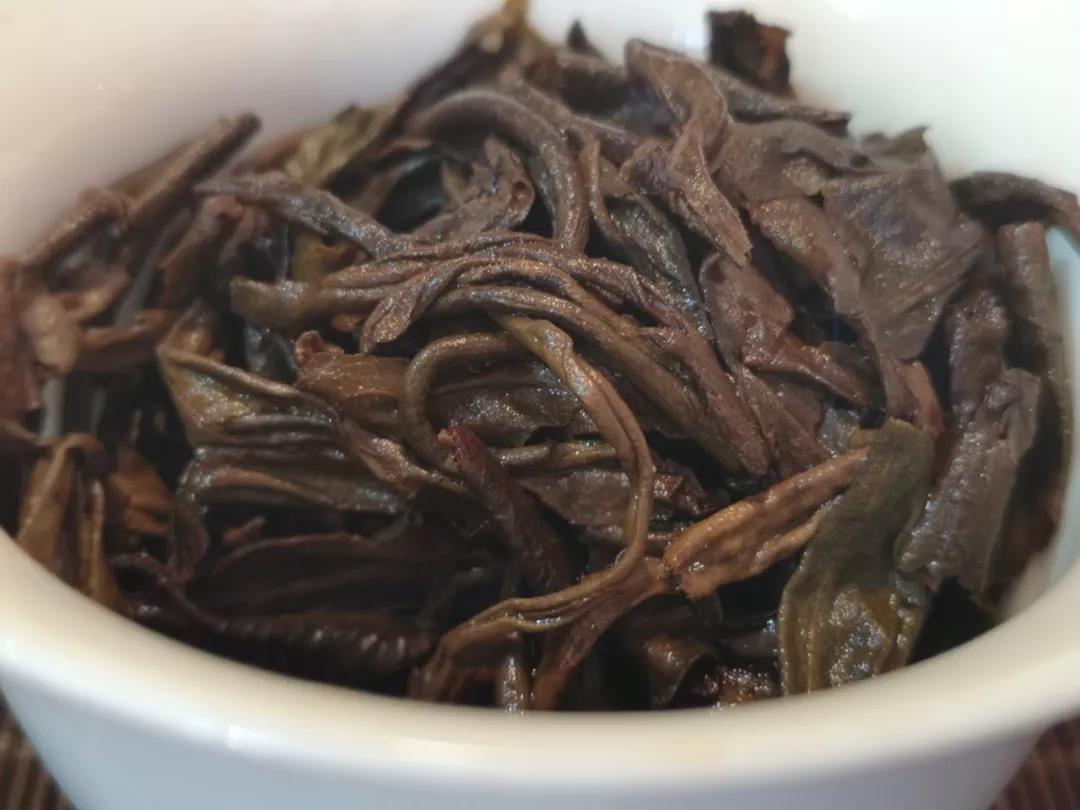
Infused leaves of Houyue Laobanzhang ripe tea after 8 infusions
We have sent out many samples and organized several tasting sessions. The general views on this Laobanzhang ripe tea are as follows:
- The soup is weak and tasteless, not yielding flavor.
- Not good...
- Messing around, it's spoiled.
- Pretty good, both bitter and sweet.
- Full-bodied soup, rich aftertaste, obvious feeling of old raw tea.
Those who say the soup is weak are probably used to strong ripe tea and accustomed to that stimulation. In fact, high-end tea is relatively light; this lightness is coordination and peace. If interested, you can read my article: "Tea Talk on Paper" No. 15: The Light Tea Life of Yunnan Ancient Tree Tea.
The most discussed flavor in ripe tea is "Menghai flavor." This "Menghai flavor" does not refer to the taste of all Menghai ripe teas, but to a taste represented by some ripe teas of a certain brand. Not all ripe teas of this brand have Menghai flavor. I think "Menghai flavor" can only be considered a taste direction for mid-to-low-end ripe tea, not suitable for high-end ripe tea. "Menghai flavor" is thick but lacks aftertaste. High-end ripe tea should have good drinking parameters, requiring the ultimate unity of taste and body sensation. Heavy fermentation consumes too much of the tea's internal quality, turning high-end into low-end, which is a waste of tea. I have drunk many heavily fermented ripe teas, and none have good aftertaste.
My tasting views are relatively close to those of some old tea enthusiasts: full-bodied soup, rich aftertaste, obvious feeling of old raw tea.
I believe light fermentation is the future of high-end ripe tea.
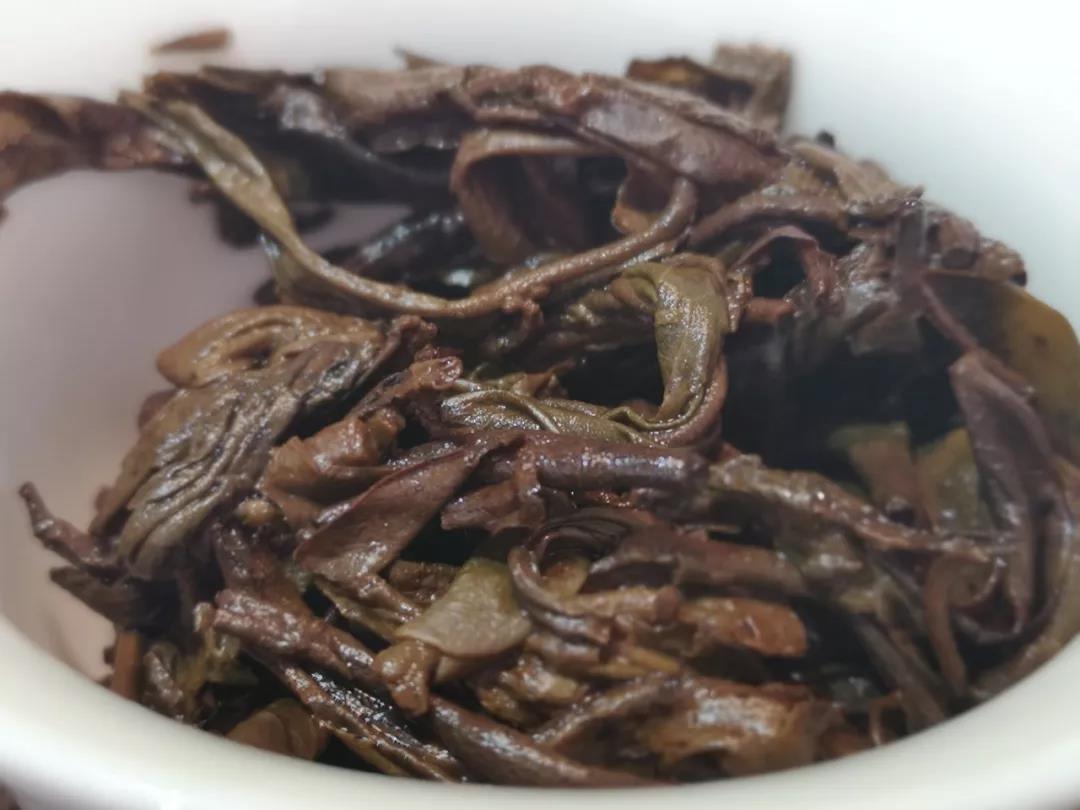
Infused leaves of Houyue Laobanzhang ripe tea after fully opening
Through this Laobanzhang light-fermentation ripe tea, let's discuss the advantages of light-fermentation ripe tea:
First, ripe tea fermentation involves piling up tea with water, creating a high-temperature and high-humidity environment through internal heat. The fermentation of ripe tea consumes the tea's own substances to generate heat, so the heavier the fermentation, the more is consumed. This is one of the important reasons why light fermentation can better preserve the tea's strength. I think this is the biggest advantage of light fermentation: less consumption, lower loss, thus lower cost, and it can retain more and better substances.
Second, light fermentation can maintain part of the raw tea taste. This new Laobanzhang light-fermentation ripe tea has sweetness, aroma, and returning sweetness and salivation, which other new ripe teas do not have. What is the purpose of making this ripe tea? It is to imitate old raw tea and have the taste of old raw tea.
Third, light fermentation means the aroma will not be overly ripe. I have always felt that the aroma of raw tea is more elegant than that of ripe tea. If aromas are divided into high, medium, and low, the aroma of good raw tea belongs to the highest level. The aroma of light-fermentation ripe tea is between raw and ripe, and finally the aroma of heavily fermented ripe tea. I think the level of aroma in tea soup is inversely proportional to temperature. What does that mean? The aroma of ripe tea is a mellow aroma, a warm aroma. The aroma of raw tea, like orchid, is a cooler aroma. The aroma of light-fermentation ripe tea is between the two, warm, and quite comfortable. If the aroma of ripe tea can achieve the cool aroma of raw tea, I think it is the best. Not only does aroma have temperature, but sweetness also has temperature; the sweetness of good tea soup is also cool.
Fourth, light-fermentation ripe tea can retain the charm of raw tea. The Laobanzhang charm of this ripe tea is very obvious. But if it were heavily fermented, this charm might disappear. Regarding this charm, we have similar products for comparison.
Fifth, the soup of light-fermentation ripe tea is not thick; it tastes very peaceful, without the strong and thick feeling of traditional ripe tea. But this does not mean that the soup of light-fermentation ripe tea is not thick; it is because the soup is peaceful. As mentioned earlier, light-fermentation ripe tea consumes relatively fewer substances, so logically, its soup should be thicker. But actually it is not, because many things are complementary. A soup that is only bitter is hard to swallow, but if bitterness is accompanied by good colloids, it is more comfortable and easier to swallow. Light-fermentation ripe tea has colloids in the soup, so it tastes coordinated, and the soup does not feel too strong.
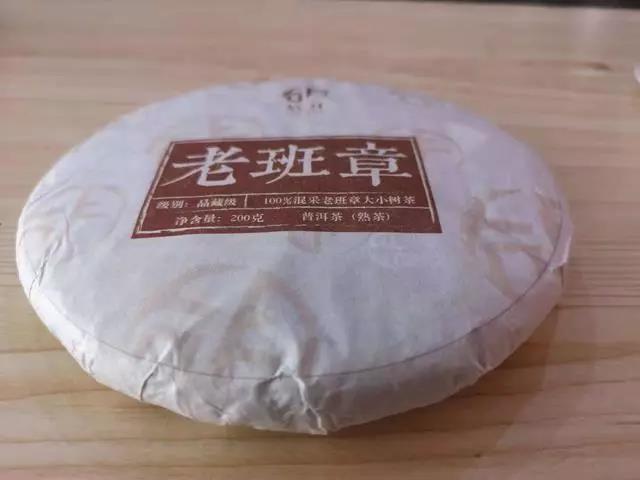
Houyue Laobanzhang cake
Two-month record of Houyue Laobanzhang:
Today is exactly two months since this Houyue Laobanzhang ripe tea was fermented. Compared with our previous memory, the soup is smoother, finer, and more moist; the bitterness is less abrupt; the feeling of old raw tea is more obvious; the soup has a rich aftertaste. We can boldly predict that by next spring tea season, this tea will be very delicious. If you have the opportunity, you are welcome to visit our Menghai store during the spring tea season to try this light-fermentation ripe tea.
This article and images are original. Reproduction must not delete this statement. Article and images are original. Author: Lü Jianfeng, WeChat: 673998, works at 51 Pu'er Net, initiator of Houyue Crowdfunding Tea.
Paragraph comments 0 · moderated
Comments 0 · moderated