
"This tea is too strong," you often hear people say, for example in the following situations.
"I can't drink it, is this tea? Medicine!" Similar remarks are the most common;
"Drink less, it's bad for your health," this is mostly said by tea industry practitioners and seasoned tea drinkers who have become very sensitive to tea and fear strong tea after years of drinking.
But there are also many people who say: "This is the taste I want, only then does drinking tea feel right." Similar remarks are not few, mostly tea addicts and old tea drinkers who have been drinking tea for years;
Lao Wang is from Yunnan, nearly forty, and has been making tea for a short time. He said that before going to university, his food was salty and spicy. I went to his hometown for a meal, and he specifically told me to keep it light, but it was still very salty and spicy, which shows how heavy Lao Wang's taste was before. Later, Lao Wang stayed in other provinces, married a Zhejiang wife, settled in Hangzhou, and sold tea to support his family. Now Lao Wang eats very lightly, and when he returns to his hometown, he is very unaccustomed to the heavy taste. Often during meals, he puts a glass of water beside him to rinse the dishes before eating. Lao Wang said that when he first left Yunnan and went outside, he was very unaccustomed to the food, feeling that everything was tasteless, and the dishes basically had no salt or chili, so he bought chili sauce and pickles to eat with; without pickles or chili sauce, he would occasionally have a light meal, which seemed delicious, and he could taste the original flavor of the ingredients, making the meal more fragrant. Later, he was unwilling to eat such heavy food, and gradually his meals became lighter and lighter until now. In the last decade or so, Lao Wang has brought Pu'er tea from Yunnan to Hangzhou every year to give as gifts, but he didn't drink it himself. It was just that friends heard about Pu'er tea and asked for it, and Lao Wang often accompanied them in drinking. In the first few years, he didn't like it at all. But from some point, in Lao Wang's words, he suddenly fell in love with Pu'er tea, especially some ancient tree raw tea. When returning to Yunnan, Lao Wang often went to tea mountains to buy tea, mostly ancient tree tea. At first, friends led Lao Wang to drink tea, but later Lao Wang led friends to drink tea, becoming the tea expert in the circle. Friends increasingly asked Lao Wang to buy Pu'er tea on their behalf, and in 2014, Lao Wang simply opened a tea shop.
Mr. Sun works in electronic components in Shenzhen. He has had a light taste since childhood, doesn't drink alcohol or smoke, and loves tea. Initially, friends led him to drink aged raw tea. In recent years, he has pursued ancient tree tea, and he needs to drink several infusions every day to fall asleep. But now he is increasingly picky about tea; many teas make him feel uncomfortable, lacking energy, some even cause bloating or headaches. Later, Mr. Sun found that drinking ancient tree tea made him feel very comfortable, so he exclusively drank new ancient tree tea and also stored more. Later, Mr. Sun found that the tea he bought was not as good as in previous years. Unable to do anything about it, Mr. Sun went to the tea mountains himself, stayed to make some ancient tree tea, drank it himself and gave some to friends. He basically doesn't try or dare to drink other people's tea.
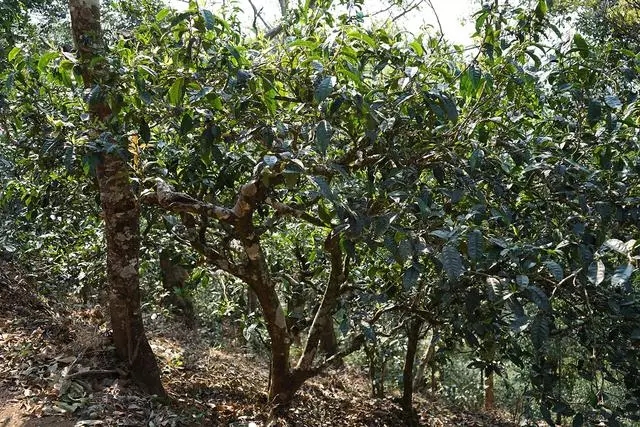
Mr. and Mrs. Li are both white-collar workers and often drink tea. Later, the media frequently reported excessive pesticide residues in tea, which scared them and they dared not drink much. Later, they learned that ancient tree tea does not need fertilization or pesticides, so they gradually started to drink ancient tree tea. After drinking it, they found the taste better, not so strong but with more aftertaste, and they have been drinking ancient tree tea ever since. Under the influence of Mr. and Mrs. Li, many people around them have also started to switch to ancient tree tea.
There are many people pursuing ancient tree tea; these are the main categories.
From a health perspective, 107-year-old academician Bei Shizhang said that his only dietary requirement is lightness. Lightness is regarded as the foundation of healthy eating.
"Cai Gen Tan" also says: If you can taste the flavor of vegetable roots, this is called light but not bland.
Let's also examine the light diet health preservation in Taoist dietary culture: Throughout history, Taoism has had a special affection for "lightness." Tracing its roots, it can go back to Laozi, the founder of Taoism in the pre-Qin period. The "Tao Te Ching" says: "The Tao when spoken is bland and without flavor." It also says: "Tranquility is supreme." Taoism not only regards "being indifferent to fame and fortune" as the highest realm of life, but also advocates a light diet. It believes that light flavor is not only the true natural delicacy, but also can regulate and nourish the internal organs, strengthen the body and eliminate pathogens, prevent and treat diseases, and prolong life. The "Huang Ting Jing" says: "Bland and without flavor, this is the food of heaven and man." Su Shi recorded in "Yao Song": "The Taoist taught me to abandon flavors, abstain from strong smells, and overcome them with purity." The "Bao Sheng Tie" says: "With lightness as the main, one can clear the qi, release desires, calm the spirit, and enhance blessings." In the Ming Dynasty, Zhou Lujing, also known as Yizhi and Meidian Taoist, said in "Yi Ling Dan": "One should eat lightly; eating light refreshes the spirit, while overeating the five flavors damages the five organs." Laozi also said: "The five flavors make the mouth dull." Here, "dull" means harm and damage; too much flavor and strong taste easily disturb the mouth and harm the stomach.
Now let's talk about the "thickness" and "concentration" of tea soup.
Regarding thickness, I discussed it in "Tea Talk on Paper" XIV: Ten Indicators of Ancient Tree Ripe Tea, and I quote it in full here.
Thickness
I like drinking hot rice porridge; the mouthfeel and throat feel are very good, full and flavorful; cold porridge feels insufficient, watery. This is the most vivid metaphor I can find for the thickness of tea. Some say concentration is thickness, some say strong taste is thickness. I think both have some truth, but neither is comprehensive. Thickness is concentration or intensity wrapped by pectin. Tea with pectin and thickness generally has smoothness. Only concentration or intensity is not right; I personally believe such tea is harmful to the body.
According to research in "Food Chemistry" extended to tea, the main factors affecting the thickness of tea soup are amino acids, soluble sugars, and pectin substances. I think this is reliable.
After understanding "thickness," let's talk about "concentration." Concentration is generally related to brewing time, amount of tea leaves, etc., and has no necessary connection with thickness. That is, tea soup with high concentration is not necessarily thick, and tea soup with good thickness is not necessarily concentrated. Tea with thickness, when brewed lightly, may lack concentration but still has thickness. We often drink tea that is relatively light but very full. A vivid metaphor: The old fire soup at home has a good taste, full and fresh, with thickness. But the hotpot water soup from street stalls, even with more MSG and chicken essence, is only strong in flavor. If you eat chicken often, you understand. If you drink tea often, you will also understand. The better the tea, the richer and more lingering the flavor.
Finally, let's talk about the taste of ancient tree tea.
Relevant studies show that the ratio of tea polyphenols to amino acids (abbreviated as phenol-ammonia ratio) in wild tea, ancient tree tea, ecological tea, and terrace tea shows an upward trend, and the bitter and astringent effects of tea polyphenols gradually strengthen. Overall, ancient tree tea has high freshness, low bitterness and astringency, and is lighter and more refreshing. Wild tea is not recommended for daily drinking due to the lack of domestication.
Reference: "Fujian Tea": The experiment used sun-dried green tea (ancient tree tea, ecological tea) from 10 townships in Menghai County. Sensory quality, main chemical components of taste, and polyphenol monomer content were studied. The results showed that the participating sun-dried green teas generally had tight and sturdy strips, with visible pekoe and moist color, strong taste, mellow and sweet aftertaste. Ancient tree tea tasted better than ecological tea. In terms of chemical components, both ancient tree tea and ecological tea had higher content than ordinary sun-dried green tea or raw Pu'er tea, especially amino acids, tea polyphenols, catechins, and GA, which were more obvious. Substances with a coefficient of variation greater than 15% included EGC, C, EC, and amino acids. Comparing the content of the same substance and its variation between the two, the amino acid and EC content in ecological tea were higher than in ancient tree tea, while the other eight components were higher in ancient tree tea. Moreover, the coefficient of variation of most chemical substances in ancient tree tea was smaller than that in ecological tea, indicating relatively stable component content.
Some people think ancient tree tea is light because its theanine content is high, meaning higher sweetness and freshness, lower bitterness and astringency, and higher smoothness, making it feel light. In contrast, some counterfeit ancient tree teas are the opposite. For example, terrace tea has high caffeine and tea polyphenol content, high bitterness and astringency, and strong stimulation to taste buds, making it feel strong.
Ancient tree tea has a light taste but with thickness and charm, soft yet powerful. Isn't it the same for many things?
This article is original. Reproduction must not delete this statement. The article and images are original. Author: Lü Jianfeng, WeChat: 673998, working at 51 Pu'er Net, initiator of Houyue Crowdfunding Tea.
##
Paragraph comments 0 · moderated
Comments 0 · moderated