
Our Houyue Red Primary Processing Facility produced 30 tons of sun-dried black tea this year. Since our first crowdfunded sun-dried black tea last year, people have been asking me what sun-dried black tea is and how it should be defined. I have talked about tea on paper for sixteen issues without exploring this topic. During last year's crowdfunding, my article "Tea Talk on Paper No. 4: How Sun-Dried Black Tea Is Made" was widely cited, and some even altered the images and published it as their own original work, but that article also did not delve deeply into the concept of sun-dried black tea. Today, I will sort out the past and present of sun-dried black tea based on the materials I have collected and my own understanding. If you have different views or are interested in further discussion, feel free to add my WeChat 673998 to communicate.
To clarify sun-dried black tea, we must first understand black tea. Most sources believe that the birthplace of black tea is Wuyi Mountain, and Lapsang Souchong is the earliest black tea, being the earliest in China and the world.
There are various theories about the origin of black tea. According to expert research, the term "black tea" first appeared in Liu Ji's (1311-1375) book "Duo Neng Bi Shi", which introduced the preparation methods of "Lan Gao Black Tea" and "Su Qian Black Tea". Zhu Sheng (1299-1370), a scholar and Hanlin academician of the Hongwu era who visited Wuyi Mountain with Liu Ji, described in his poem "Ming Li": "Tea with grassy aroma is its temperamental nature (habits brought from growth). Tea with floral aroma is its heavenly nature (innate qualities). Suppressing it makes it solid, solid leads to heat, heat makes it soft, and soft gradually removes the grassy aroma (the black tea production process first removes grassy aroma). However, fearing that the floral aroma may be overly released (while removing grassy aroma, avoid losing floral aroma), it is then lifted again. Alternating suppression and lifting, the grassy aroma dissolves, floral aroma permeates, and the tea's temperament transforms, achieving heavenly harmony (the entire process is to remove grassy aroma while preserving floral aroma)." The poem says: "One suppression then another lift, from grassy nature to floral fragrance. Marveling at nature's wonders, simplicity without harming the essence." The poem elaborates on the fermentation in black tea production, indicating that black tea was made in Wuyi Mountain during the early Ming Dynasty.
The earliest record of Souchong black tea can be found in "General History of the Qing Dynasty", volume 2, page 847: "At the end of the Ming Dynasty, in the 13th year of Chongzhen (1640), black tea (including Congou, Wuyi, Souchong, Pekoe, etc.) was first introduced to England by the Dutch." Congou black tea, along with Souchong and Pekoe, are varieties of Wuyi black tea. The statement that Lapsang Souchong is the ancestor of world black tea is very accurate, indicating that the Tongmu Pass area in Wuyi Mountain is the birthplace of world black tea.
In 1854, Gao Bing-san and other Guangdong tea merchants went to Hefeng County to process black tea, which was transported via Yichang, marking the glorious beginning of Yihong, accounting for 40% of the national black tea export at that time. Around 1875, Hu Yuanlong from Qimen processed black tea in Qimen.
In 1938, Bai Mengyu established a tea factory in Nannuo Mountain, Xishuangbanna, Yunnan, and in 1939, trial-produced black tea, marking the beginning of black tea in Yunnan.
Bai Mengyu first inspected tea processing techniques and market conditions in over 20 provinces and cities in China, then went to Japan to learn tea processing techniques. After returning, he hired more than ten senior technicians from Shanghai and Hangzhou, and transported British-made rolling machines, drying machines, cutting machines, sifting machines, and generators from Myanmar by oxcart. The Nannuo Mountain Tea Factory became a modern mechanized tea factory. The machine-made black tea from the Nannuo Mountain Tea Factory was in short supply in Southeast Asian countries after its release.
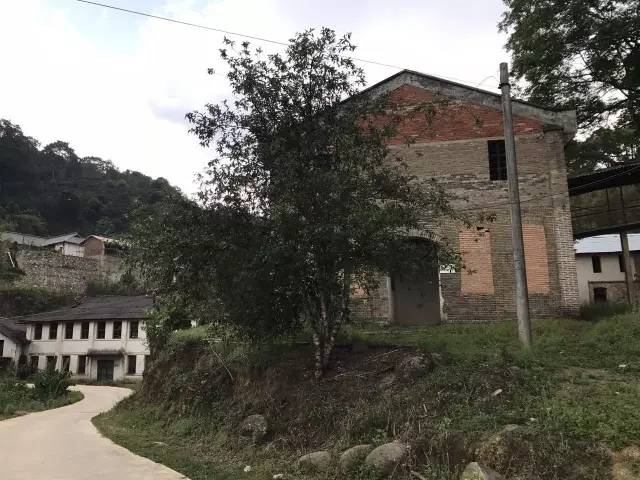
Nannuo Mountain Tea Factory built in 1938
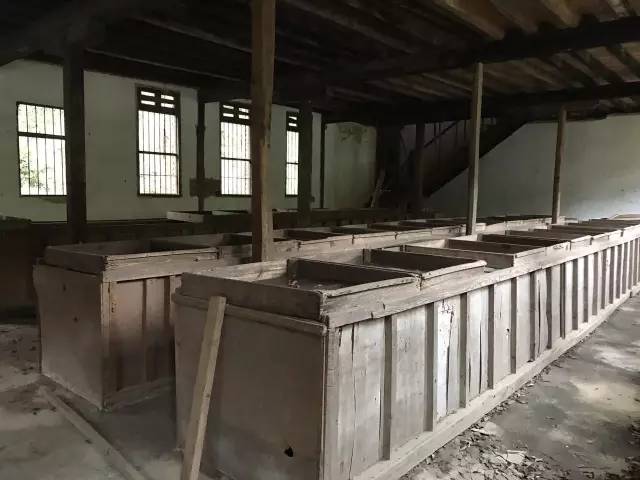
Abandoned withering workshop on the second floor of Nannuo Mountain Tea Factory
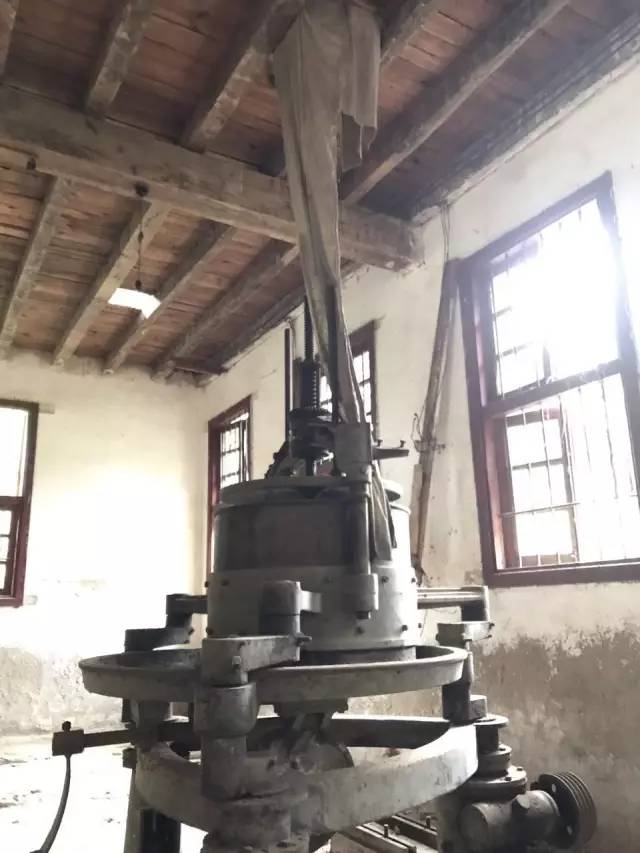
Abandoned rolling workshop on the first floor of Nannuo Mountain Tea Factory
In November 1938, Feng Shaoqiu successfully trial-produced 500g of one-bud-one-leaf black tea in Fengqing. In early 1939, Feng Shaoqiu was ordered to establish the Fengqing Tea Factory (then called Shunning Experimental Tea Factory), and recruited technicians from Zhejiang, Anhui, Hunan, and Jiangxi provinces. The Fengqing Tea Factory used local methods, including human-powered wooden three-barrel rolling machines, foot-operated tea drying machines, and bamboo basket drying frames, and successfully produced the first batch of Congou black tea totaling 16.7 tons, named "Yunhong".
In 1940, Yunnan black tea was uniformly renamed "Dianhong", and the name "Dianhong" has been used ever since.
From this information, we see that all black teas are dried by baking. So how did sun-dried black tea come about?
To clarify this issue, I think we must first understand two questions:
- Was there a sun-drying process for black tea before the sun-drying process in Yunnan? Why not?
If the first question is valid, then we need to ask the second question:
- Why did the sun-drying process for black tea appear specifically in Yunnan?
I. Was there a sun-drying process for black tea before the sun-drying process in Yunnan? Why not?
I have searched various materials and asked many tea makers from other production areas, and found no sun-drying process for black tea outside Yunnan.
Let's look at the climate of Wuyi Mountain, the birthplace of black tea.
Wuyi Mountain is in a mid-subtropical monsoon humid climate zone. There are significant climate differences throughout the year. Annual precipitation is 1960 mm, and average annual temperature is 19.7°C. In spring, temperatures rise, with continuous spring rain, but spring cold spells often occur. Late spring to early summer (May-June) is the rainy season with heavy rain. Local flooding often occurs. In midsummer, the weather is hot. Occasionally, there are local thunderstorms and rainfall under typhoon influence, followed by drought.
That is, during the spring tea-making season, Wuyi Mountain is rainy, lacking conditions for sun-drying. Of the two major drying processes, baking and sun-drying, only one remains. In Wuyi Mountain, when discussing tea drying, it specifically refers to baking. However, in Fujian's Fuding, the drying process for white tea does include sun-drying, but due to mass production and the continuous rain in Taimu Mountain, the actual drying process for white tea in the Taimu Mountain area is mostly baking. Sun-drying depends on weather, lacks volume, and is mostly for promotional purposes.
Therefore, under the weather conditions of Wuyi Mountain and other tea areas, it is unlikely that a sun-drying process would have developed.
II. Why did the sun-drying process for black tea appear specifically in Yunnan?
If you stay on Yunnan's tea mountains in spring, you will find that it rarely rains, and the scorching sun is what tea makers love most. Sun-dried green tea (raw tea) requires such weather. Yunnan tea makers, accustomed to sun-drying, would want to sun-dry any tea. For example, in Yongde, freshly fermented ripe tea is often sun-dried after piling. Sun-drying black tea is actually the most normal process. Initially, few people sun-dried black tea because if the withering is insufficient or fermentation is incomplete, sun-drying can result in a grassy flavor. Don't tell me you like that flavor; most people consider it a defect. Baking can effectively solve this problem, which is probably why sun-dried black tea remained niche and struggled to reach the masses for a long time. In recent years, sun-dried raw new tea has been pushed to the market in large quantities, and consumers have partially accepted these sun-dried green off-flavors. Sun-dried black tea has gained market foundation, and a small group began sun-drying, then more and more followed suit, and sun-dried black tea finally began to reach the masses.
From the fourth crowdfunded ancient tree sun-dried black tea of Houyue to building my own large-scale professional black tea factory this year focusing on sun-dried black tea, I have been searching for the origin of sun-dried black tea. I have found various versions of legends, mostly promotional materials from tea companies. With this question, I have been searching and also went to Wuyi Mountain to understand. The above is my comprehensive analysis of the origin of sun-dried black tea based on various situations I have learned. I think it should be like this, with no mystery and nothing to boast about. It is just the nature of merchants to dig out this concept, hype it, and amplify its effects, making sun-dried black tea seem like a great invention created by Yunnan people. Tea should return to its nature: eaten raw as medicine, boiled as a dish, drunk clear or mixed; sun-drying on sunny days, low-temperature or high-temperature baking on rainy days are just process issues.
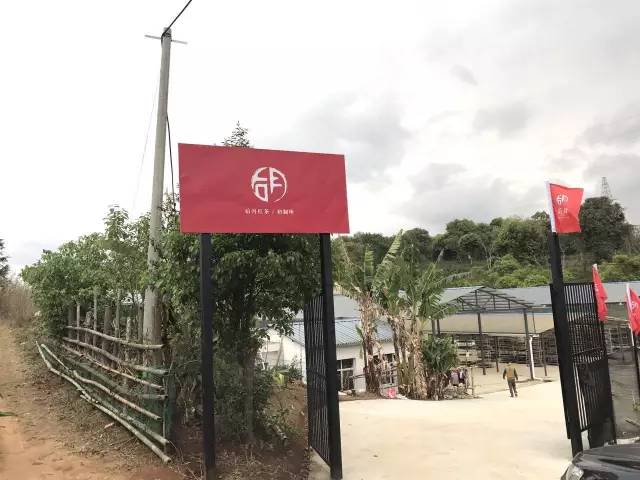
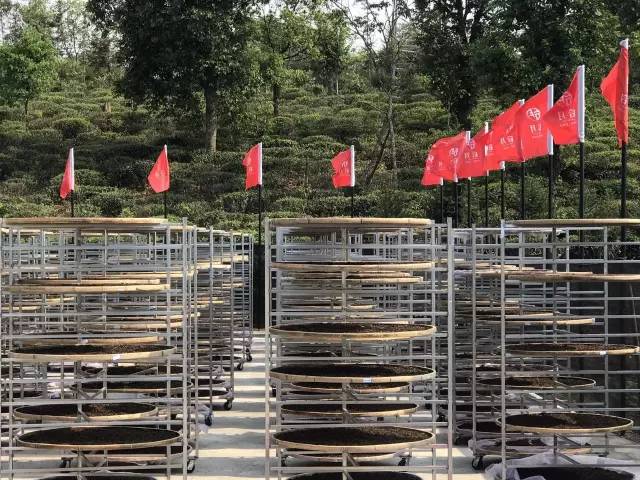
Houyue Black Tea Factory gate and drying yard
Only by returning to the original intention of tea and not mythologizing it can sun-dried black tea go further. I do not intend to belittle sun-dried black tea; returning to authenticity is the foundation. This year, the seventh crowdfunded tea of Houyue is ancient tree sun-dried black tea. Of course, I hope sun-dried black tea can support half of Yunnan black tea.
Happiness sun-dried, in tea, in life!
Articles and images are original. Author: Lü Jianfeng, WeChat: ynwuse, working at 51 Pu'er Net, initiator of Houyue crowdfunded tea, convener of Yunnan Houyue Black Tea Co., Ltd.
Comentarios por párrafo 0 · moderado
Comentarios 0 · moderado