
I've written twelve installments of "Tea Talk on Paper," mostly about raw tea. I've never discussed ripened tea, indeed because ripened tea is harder to control, and the current ripened tea market is chaotic, with various concepts flying around: ancient tree ripened tea, traditional techniques, master fermentation, off-ground fermentation, wooden box fermentation, floor fermentation, small molecule water fermentation, microbial fermentation... I can easily list a bunch, but from my personal experience, I've tasted many ripened teas on the market, and those that are drinkable with a clean mouthfeel and comfortable body are truly rare. Good ripened teas are indeed scarce, but it's not the same for raw tea; there are many excellent raw teas. Every tea maker, shop, and factory has many classic, delicious raw teas. As far as I know, the consumption of Pu'er ripened tea far exceeds that of raw tea. Our sales data from 51 Pu'er Net over the years also confirms that about 70% of tea sold is ripened. Why this inverted situation?
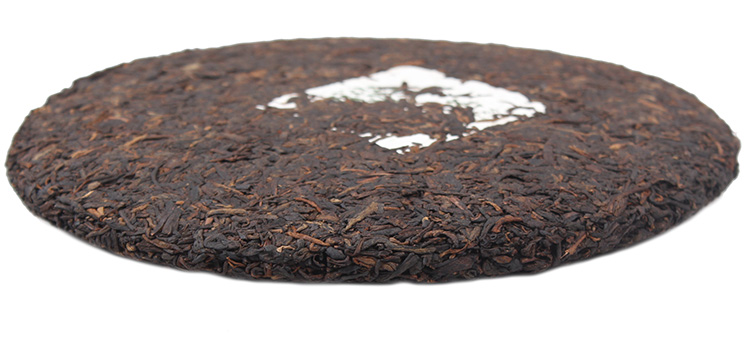
With this question, I've asked many experts and industry insiders, and there are many reasons, which can be summarized as follows.
- Ripened tea is led by major factories like Dayi, with stable quality, such as 7572, which has acceptable taste and high cost-performance, and will become very delicious after aging. Other factories, due to scale and brand recognition, cannot directly compete with Dayi and others, so they only make very cheap or very expensive ripened teas, with mixed quality, and passing off inferior as superior is common.
- Ripened tea needs aging to taste good, including 7572; even the current year's has taste defects. Dayi, because it has old tea from previous years as evidence, finds it easier to promote new tea. Other brands' ripened teas are hard to promote, and they are unwilling to invest in R&D or establish storage, so naturally, good ripened teas are few.
- Most ordinary consumers don't understand tea well. High-end raw tea has a large group of enthusiasts who understand and are willing to pay. Ripened tea lacks this foundation, so few people make high-end ripened tea. You'll see that many second-tier factories produce far more raw tea than ripened. With fewer people making high-end, the total amount of good ripened tea is naturally much less.
- Ordinary consumers drink ripened tea just to have tea, as long as it tastes better than water, and are sensitive to cost, leading to a flood of low-end ripened tea in the market. These players rely on cost and scale advantages and never touch high-end ripened tea.
- Good raw materials are all used for raw tea, which has a short cycle and quick cash conversion, and tastes good right after making. For ripened tea to be good, it needs at least 1-2 years, or even longer. The cash conversion cycle for ripened tea is long, so businessmen are not willing to invest heavily. Many ripened teas are made from moldy or unsellable raw materials that have no other use, so they are fermented into ripened tea; these teas are not good.
- Most people don't understand ancient tree raw tea, and after fermentation into ripened tea, even fewer can understand it. If you really use a batch of ancient tree tea to invite a master to ferment, the cost is high, and consumers still don't get it. That would be foolish, so naturally, few do it.
- To shorten the ripened tea cycle, fermentation tends to be over-fermented. Over-fermentation is also to adapt to rapid consumption, causing many ripened teas to become "fast food" style ordinary teas. Over-fermented tea has a clear liquor, sweet taste, but lacks depth, making it hard to transform into good ripened tea.
......
In fact, this is the case. Colleagues often ask me for high-end ripened tea. I've searched through tea market factory warehouses many times, and classic good ripened teas are truly scarce. The ones I can appreciate are all over a thousand yuan per cake, and some ripened teas costing several thousand or ten thousand yuan I didn't even fancy. What's wrong with ripened tea?
Ripened tea is in a mess, hard to clarify.
Fortunately, many of our peers are making changes.
On the tea mountains, I've seen people controlling from fresh leaf rough processing, storing sun-dried tea for months or even half a year before piling, and the smell of the fermentation pile is very pleasant. We've also had the fortune to taste the ripened tea from the pile, and it indeed performs outstandingly. Unfortunately, the quantities are small, and they are distributed within their circles, with very little flowing to the market. But given time, once they are fully prepared, good ripened tea in the market will no longer be hard to find.
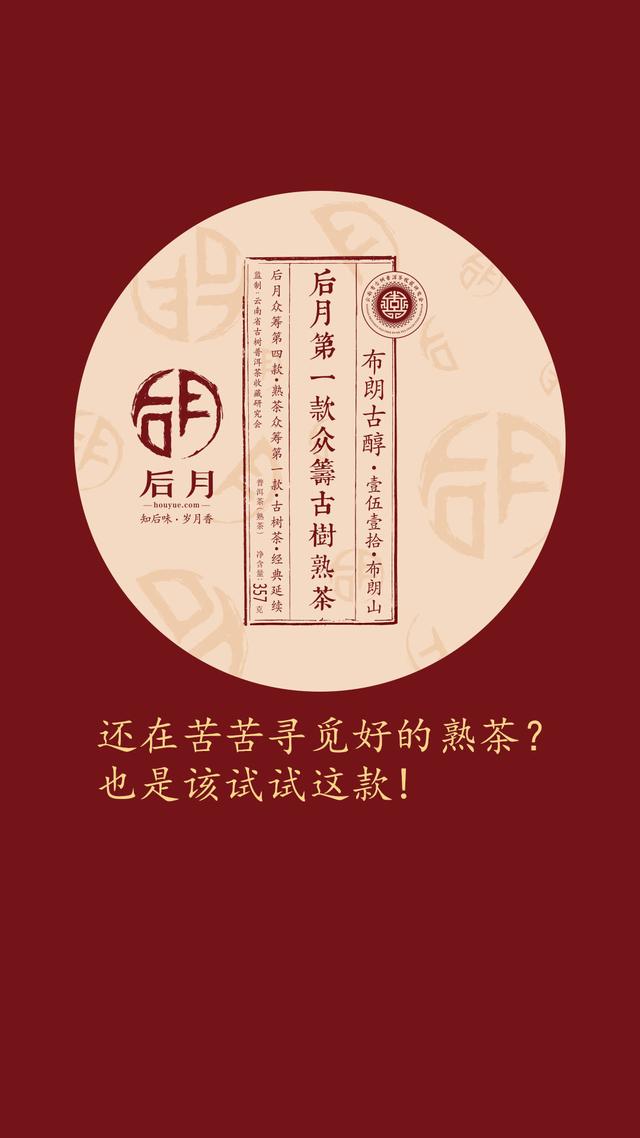
At the beginning of the crowdfunding, I thought about crowdfunding ripened tea, not to change anything, but just to prove that good ripened tea can also be low-cost and sold at 199 yuan per cake. Finally, the fourth tea in the Houyue crowdfunding is ripened tea, which will be officially launched in November. I hope to give everyone a surprise in 2016, a good impression of ripened tea.
Article and images are original, author Lü Jianfeng, WeChat: 673998, working at 51 Pu'er Net, initiator of Houyue crowdfunding tea.
Comentarios por párrafo 0 · moderado
Comentarios 0 · moderado