
White tea is relatively difficult to make well. According to my strict view, most white tea on the market is not suitable for immediate drinking. Some radicals even dismiss the entire category, and they have their reasons.
I started making white tea in 2017 and have produced over ten tons since then. I've made both high-end and low-end versions. Among the four major tea types—sheng (raw), shou (ripe), black, and white—white tea has almost no inventory, which seems successful from a market perspective.
However, writing articles is like life; the most feared word is "however," but it is inevitable and even most necessary to record.
However, I still dare not make white tea easily. I try to make it thoroughly processed, but I inevitably encounter various weather conditions that can cause problems.
What is the problem?
Cold and cool nature!
1. Tea is an art of fire.
From fresh leaves to drinkable tea, fire is involved at every step. Tea is an art of fire. Firing (killing green) requires fire, drying requires fire (baking or sun-drying), and brewing requires fire (boiling water). The life of tea leaves is a life of playing with fire.
For sheng tea (green tea), I can make it very thoroughly processed.
I have a large number of finished products for experiments and comparative tasting. If you want to know more, please refer to my article "Tea Talk on Paper: Making Tea Thoroughly—Crafting 'Healthy Tea' That Can Be Drunk."
During the firing stage of sheng tea, fire participates for a relatively long time—over ten or even twenty minutes of high temperature—giving the fresh leaves the opportunity to lose their cold and cool nature.
But here comes that damned "but."
However, during the production of white tea, there is no high-temperature involvement. If the drying step uses baking, some remedy can be applied, but our white tea is sun-dried. How can we remedy it?
Without a step similar to the firing (killing green) of sheng tea, making white tea is actually quite difficult.
I have seen many tea farmers make white tea by first withering indoors for 1-2 days, then directly sun-drying. Some farmers pile the tea (or seal it in bags) to sweat before sun-drying. This kind of white tea has a harsh liquor and doesn't quench thirst, but it is very fresh and sweet. Tea drinkers who are not sensitive to their bodies might actually like it. However, long-term consumption of such tea can cause significant harm to the body. For example, young couples who make this tea and drink it long-term may find pregnancy a luxury.
2. Removing greenness (zou qing) is the main purpose of primary processing.
There are many reasons for tea's cold and cool nature, which the tea industry collectively calls "greenness" (qing). The process of making tea is a process of "removing greenness" (zou qing).
Fresh leaves begin to lose greenness from the moment they are plucked. The primary processing facility is filled with the smell of greenness.
Here, I want to explain tea making based on my understanding. Forget the jargon, ignore the science peddlers, especially those who claim to have read many books—they are all about borrowing ideas and rarely truly understand tea. Even AI, with all the books it can access, needs extensive training to understand; how much more so for human effort!
There are dozens of techniques in primary processing. The ones I commonly use are: withering (spreading to cool), sun-drying greens, firing (killing green), rolling, shaking greens, and sun-drying.
[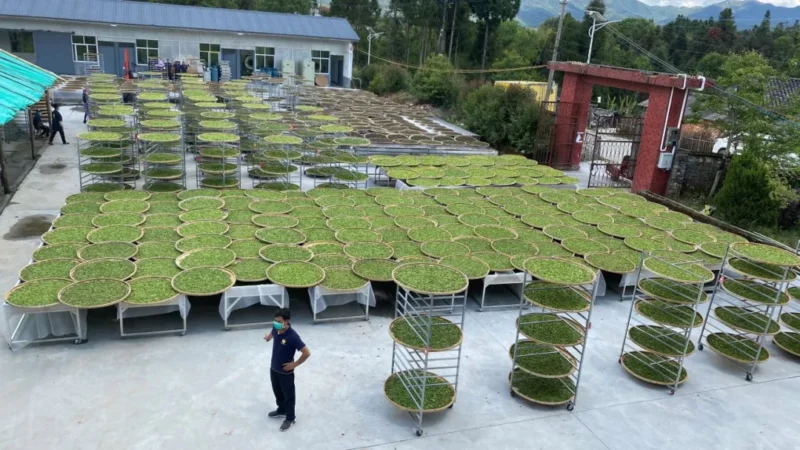
Sun-drying fresh leaves for white tea (guess how much white tea I made that day?)
The main purpose of these techniques is to remove greenness!
Withering actually causes a lot of greenness to dissipate. Standing beside a withering trough, you smell a strong green odor. Of course, withering also softens the leaves, making them less prone to damage in subsequent steps. But using normal temperature to remove greenness is the main purpose of withering.
Sun-drying greens is a common action during the withering of fresh leaves, especially for white tea. It is a necessary action for using solar fire to aid in removing greenness. The main purpose of exposing leaves to the sun without damaging them is to remove greenness.
Firing (killing green), commonly called stir-frying tea, besides causing rapid moisture loss, involves fire participation and high temperature to quickly remove a large amount of greenness. That is the main purpose of firing; otherwise, one could skip firing and go straight to drying.
Rolling: Tea masters often say this breaks cell walls and makes the tea's flavor more accessible. After researching extensively, I haven't fully understood it. But I know rolling has two main purposes: one is to continue removing greenness, and the other is to shape the tea.
The purpose of shaking greens is even simpler: when fresh leaves can no longer lose greenness, you shake them to revive them so they continue. Of course, this stage also removes a lot of greenness.
Sun-drying is to preserve the result of removing greenness, making the tea dry and storable and drinkable. Of course, sun-drying itself continues the removal of greenness. Some experienced masters, before the tea is completely dry, pile the tea to use the sun and the last bit of moisture to drive out greenness more thoroughly.
Greenness is the obstacle to making good tea; removing it is everywhere.
Every spring, when I make sheng tea, before pressing into cakes, I try to let the dry mao cha rest for a longer period. This action is called "sweating."
When selling tea, freshly pressed cakes need to be stored for a few months before selling. Some people even wait years. I think this is also related to removing greenness. If you smell a freshly pressed sheng cake, it has a grassy aroma, which improves greatly after a few months.
Making tea is the process of removing greenness, but the enemy of removing greenness is moisture. Once the leaves dry out, it's hard to remove greenness. Based on this principle, use your imagination, and you can make good tea. For example, I often think about creating a high-temperature, high-humidity environment for withering, so the leaves don't dry too quickly but can still lose greenness rapidly. Of course, I haven't had the chance to experiment due to various distractions. I don't know when my conditions will improve... I await your experiments.
[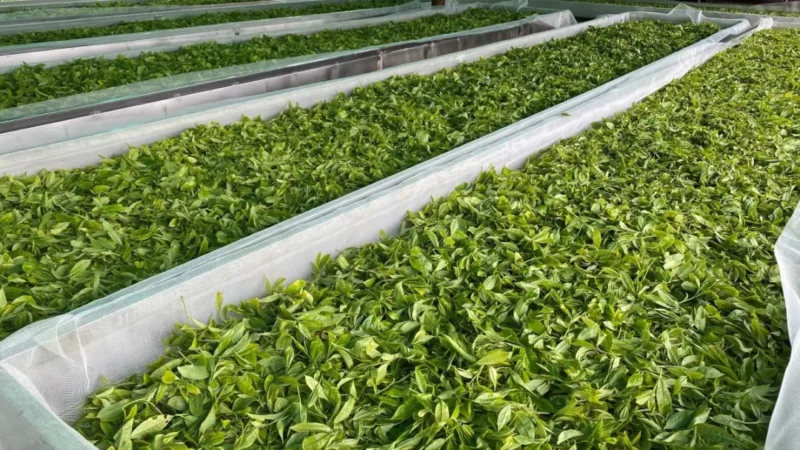
Sun-drying greens
3. Removing greenness from white tea?
By properly using withering, sun-drying greens, shaking greens, and sun-drying, it is possible to make white tea less cold and cool. However, the weather is unpredictable and uncontrollable. There aren't always sunny days during production, and I often encounter problems.
Many people make white tea even more casually—just dry it and it's ready to drink...
[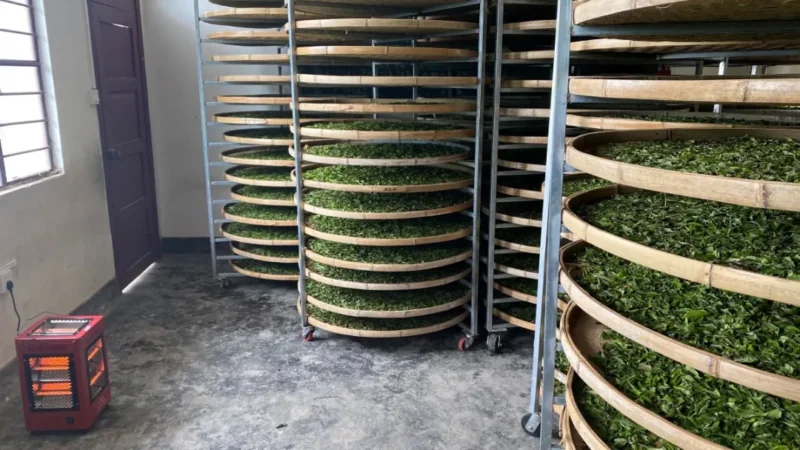
Warming the tea by the fire on a cold day
4. More discussion and exchange
I will continue to pay attention to white tea production. When conditions improve, I will experimentally invest in a sunroom or other mechanical equipment, which may help me make better white tea.
You are all welcome to discuss and exchange ideas.
This is the fortieth article in my "Tea Talk on Paper" series. Both text and images are original. Click to read more articles in the "Tea Talk on Paper" series.
Comentarios por párrafo 0 · moderado
Comentarios 0 · moderado