
Pu'er tea gets better with age and is known as a drinkable antique. Good tea stored properly will improve. Today we explore how to build a smart Pu'er tea warehouse. Those who can afford constant temperature and humidity equipment and don't mind electricity bills can skip this article. Small and medium-sized practitioners, especially bosses, please read carefully; it might be very helpful.
The most important factors for storing Pu'er tea are humidity and temperature. Personally, I think temperature changes won't harm Pu'er tea; it only affects the speed of aging. But humidity is critical. The industry generally believes that warehouse humidity should not exceed 65-70%. For example, in Guangdong, where many Pu'er tea practitioners and warehouses exist, the hot weather is ideal for storing Pu'er tea, but the humidity is notoriously high (see below), sometimes reaching 100%. Controlling warehouse humidity is crucial.
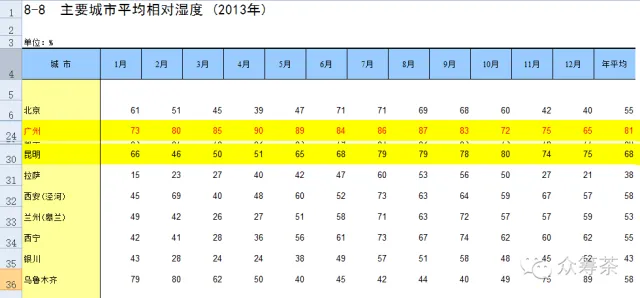
Data found online: In 2013, Guangzhou's average humidity was 81, Kunming's was 68.
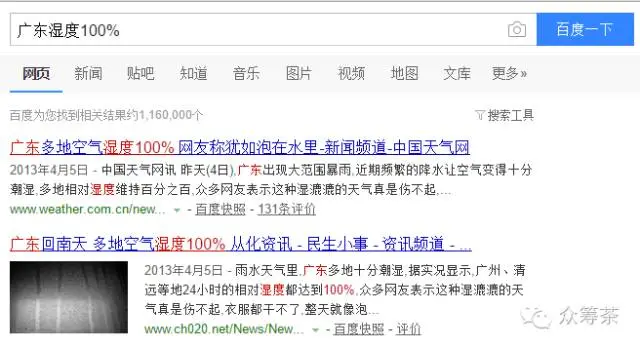
Humidity in many parts of Guangdong reached 100%.
Today, we mainly discuss how to intelligently control warehouse temperature and humidity. Other related topics, such as ventilation and tea placement, will be detailed in another article.
For small warehouses, you can simply buy a machine that automatically detects humidity and dehumidifies; on Taobao, they cost around 1,000 RMB.
For larger warehouses requiring multiple dehumidifiers and temperature control devices, see below.
It's very simple, just the following steps:
- Use smart temperature and humidity sensors to monitor warehouse conditions at all times.
- When temperature or humidity exceeds thresholds, trigger the gateway.
- The gateway sends commands to smart plugs, which automatically control dehumidifiers and temperature.
The advantage is that sensors can be placed in the center of the warehouse while devices are around the perimeter, ensuring accurate readings. Many brands offer such devices; Xiaomi has them for a few hundred RMB (excluding dehumidifiers and temperature control units).
Generally, to avoid waste, I think controlling humidity is sufficient; just add a dehumidifier. If the tea is very valuable and temperature adjustment is necessary, you can add a temperature control device similarly.
After writing this article, I exchanged ideas with peers. The main concern is how to store tea to make it better. I consulted Mr. Li from Hong Kong's Tong An Tea Company. His family has been in the tea business for over a century and has multiple professional warehouses in Hong Kong and mainland China. His advice is as follows:
- For new tea in the first year, both humidity and temperature can be slightly higher. Recommended humidity is 70%, temperature 37-40°C, but do not store for more than two years. Note that high humidity must be accompanied by high temperature; otherwise, the tea may mold. This humidity is still considered dry storage, not wet storage.
- After two years, control humidity around 60% and temperature 30-35°C, and you can store it indefinitely.
- Storage conditions vary by origin, mainly based on the tea's characteristics. Teas from Menghai tea area, like Brown Mountain, are robust; they can be stored with slightly higher humidity and for longer. Teas from Yiwu, which are less intense, and other expensive tea areas, should be stored more conservatively.
"Better with age" means that good tea, under proper storage, will improve. First, the tea must be good; second, storage must be proper. Inferior tea cannot be expected to improve with age. Good tea must also be stored well. Storage is a major subject; this is why the same tea can fetch sky-high prices or go unsold depending on storage conditions.
Article original, some images from the internet. Author: Lü Jianfeng, WeChat: ynwuse, works at 51 Pu'er Net, initiator of Houyue Crowdfunding Tea.
Comentarios por párrafo 0 · moderado
Comentarios 0 · moderado