
Someone prides themselves on frying tea well, challenging others everywhere, often saying, "Look at how high the aroma of my fried tea is, how fine the water, how good the throat appeal." Whether newcomers or veterans in tea making, none earn their respect; only their tea is considered good. Such people are numerous on tea mountains, wandering around, preferring crowded places. Once seated, they often pull out their own tea for tasting, asking you to guess the tea region or tree size. If you guess the expensive ones, they tell you that's skill—turning cheap tea into expensive. If you guess big trees, they're even more pleased, claiming it's even greater skill to make small trees taste like big ones, undetectable by anyone... They mingle in circles, boasting about their frying skills. Why? To take orders and sell tea.
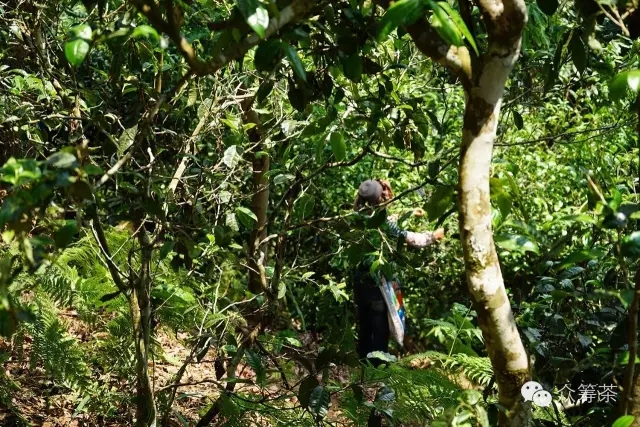
Tea-picking women in Nannuo Mountain
I've encountered quite a few, and have tasted some of their works. At first sip, they seem good—strong flavor and high aroma—but upon careful tasting, the liquor is harsh and thin, truly the kind of "good tea" that harms with overconsumption. I've watched some of them make tea, and there's a common trait: fresh leaves go onto the withering trough, sit quietly for hours with little change, then start pan-firing. In the wok, they alternate between low temperature, quick tossing, and steaming, proudly claiming to "read the tea and adjust," each face radiating an artist's confidence and brilliance. Some fry right next to pigsties; some dry on rooftops, with the "fragrance" of nearby livestock wafting over. I look down on such tea, but the market for it is large; many people like it—it stimulates salivation, returns sweetness, and is strong. These people still have a market, sitting at the head of the table, with everyone listening attentively and proud to be their friends.
Today, I'm not here to criticize them, but to raise today's question, a phenomenon that seems to be the industry mainstream now.
Is frying tea the same as making tea?
I say no! Frying tea is just one step in primary processing; many other steps are equally important. Let's use cooking as an analogy: to make a good dish, the ingredients are crucial. A bought chicken can't replicate the flavor of a free-range one. You select good vegetables and seasonings, wash and prepare them properly, and only then start cooking; frying is just one step. Tea making is even more complex. The management of fresh leaves before frying is very important. In my article on the formula for good tea, I believe fresh leaf management accounts for 30 points, frying (i.e., killing green) and rolling together account for 30 points, and the primary processing environment accounts for 40 points.
Frying (killing green) is only one step. From fresh leaf management onward, everything is crucial. If fresh leaves are poorly managed—insufficient or uneven water loss—handling them in a high-temperature wok is risky and demands higher precision. A slight mishap results in harsh, thin liquor. Many people imitate superficially, having watched skilled tea makers and memorized the process and key steps, then claim to be experts. They know the "how" but not the "why," so they can't learn or adjust, never advancing to expert level. Showing off and teaching others to fry tea is misleading and harmful to themselves.
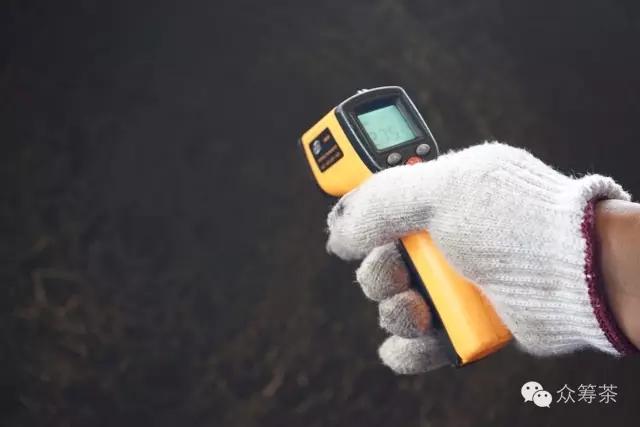
Precise recording and management are as important as experience
The environment for primary processing, including sun-drying, is very important. Focusing only on frying tea, requiring someone to tend the fire, specific wok thickness and tilt, but ignoring the environment, is even more dangerous. The primary processing is also a process of expelling impurities; what expels also absorbs. A poor environment—smells from cooking, pig manure, cow manure, chicken manure—causes immense damage to the tea.
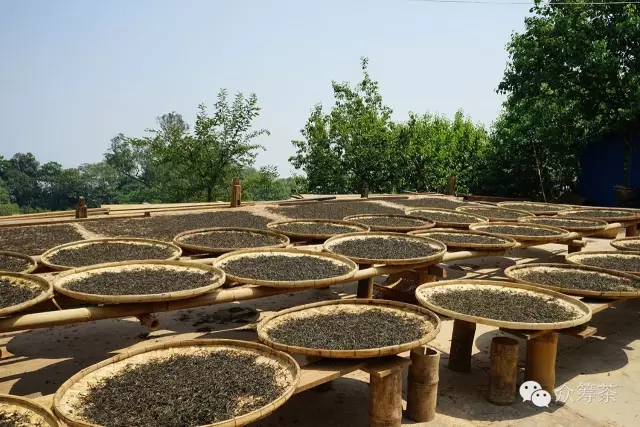
Drying ground in the forest
Not knowing how to taste tea also means you can't make good tea. Without tasting skills, you can't adjust, don't know where fresh leaf management should aim, or spot problems in frying or the environment. For me, good tea should first make the body feel very comfortable—like pouring a bowl of water into a sand pile, it disappears instantly, without the body needing to resist and absorb, and certainly not causing stomach pain. Then consider mouthfeel: fullness of the liquor, charm, salivation, and sweetness. You can't reverse that order. If it tastes good but makes the body uncomfortable, it's not good. The worst part is that too many people treat such tea as treasure, selling, drinking, and collecting it.
Making tea is a lifelong endeavor. For me, I only trust my body's sensations!
All articles and images are original, by author Lü Jianfeng, WeChat: ynwuse, working at 51 Pu'er Net, initiator of the Houyue crowdfunding tea.
Comentarios por párrafo 0 · moderado
Comentarios 0 · moderado